Can Sports Betting Be Profitable Long Term? The Complete Truth

💡 Key Takeaways
- Only 3–5% of sports bettors are consistently profitable over the long run. Between 78% and 97% lose money when accounting for all bets placed over a full year.
- To break even at standard -110 odds, you must win at least 52.38% of your bets — just to offset the built-in sportsbook vig. Consistent profitability requires a 55–60%+ win rate.
- Closing Line Value (CLV) — not your win-loss record — is the single most reliable predictor of long-term profit. Professionals aim to beat the closing line on at least 80% of their bets.
- Even the best bettors face a secondary obstacle: sportsbooks actively limit or ban accounts that consistently beat their lines, making scaling your edge increasingly difficult.
- Long-term profitability is possible but demands a rigorous, investment-style approach: statistical modeling, disciplined bankroll management, multi-book access, and cold emotional detachment from outcomes.
📑 Table of Contents
- The Brutal Reality: What the Numbers Actually Say
- Understanding the Vig: The Math Working Against Every Bettor
- The 3% Who Actually Win: What Makes a Sharp Bettor
- The Five Pillars of Long-Term Profitable Betting
- Closing Line Value (CLV): The Most Important Metric You've Never Tracked
- Bankroll Management: How Pros Survive the Inevitable Variance
- The Hidden Enemy: Sportsbook Limits and Account Restrictions
- The Realistic Expectations Framework for 2026 Bettors
Americans legally wagered a staggering $166.94 billion on sports in 2025 alone — an 11% increase from the year prior. The industry generated a record $16.96 billion in revenue for sportsbooks. Behind those numbers lies one uncomfortable truth: almost all of that revenue came directly out of bettors' pockets.
So can sports betting actually be profitable over the long term? The honest answer is yes — but the caveat is so severe it changes everything. Only an estimated 3% of sports bettors consistently make money over time. The other 97% are, whether they know it or not, funding both the winners and the house. This guide is the most thorough breakdown of what long-term profitability in sports betting actually looks like, what the data says, how the rare winners do it, and what stands between you and sustainable profit.
The Brutal Reality: What the Numbers Actually Say
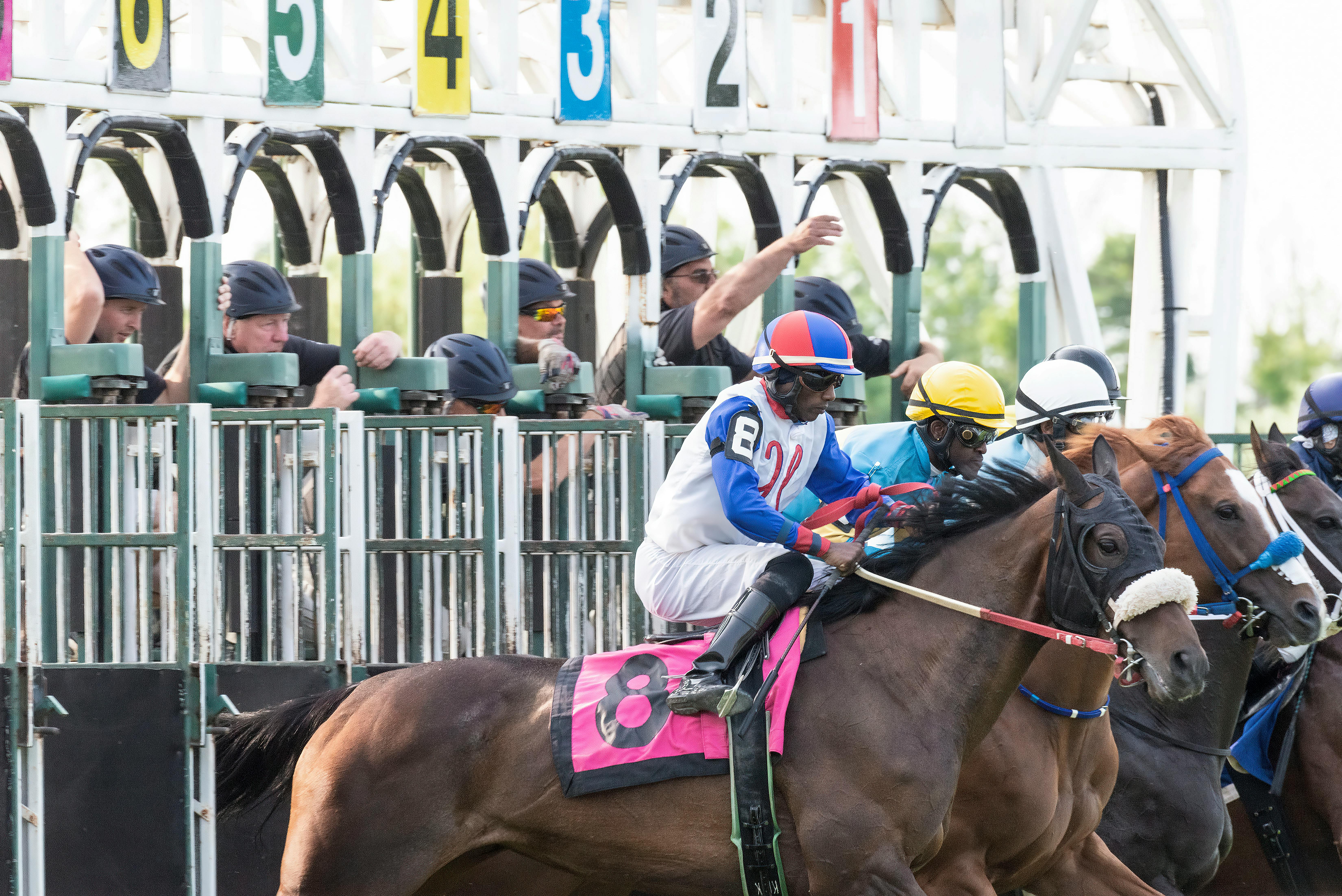
Let's open with the number that reframes every conversation about sports betting and profit: only about 2–3% of sports bettors are consistently profitable over a 12-month period. Multiple large-scale studies and industry disclosures converge on this same figure. What it means in practice is that for every 100 people placing bets this season, roughly 97 will end the year with less money than they started.
The short-term picture is slightly more forgiving but deeply misleading. In any given season, somewhere between 15–20% of bettors may finish in the black due to the enormous role variance plays over small sample sizes. But sustaining those results across multiple seasons is where the pool of winners shrinks dramatically. Professional bettors represent less than 1% of all active accounts, and the most successful among them earn what amounts to a modest professional income — with estimates placing top-tier annual earnings in the low to mid six figures after expenses, taxes, and the relentless time investment required.
Perhaps the most telling statistic comes from survey data showing that 40% of sports bettors believe they have net gains in the past 12 months — yet independent industry data consistently shows that figure cannot be accurate. Bettors, by nature, remember their wins more vividly than their losses. This self-reporting gap is itself one of the most dangerous psychological traps in the entire betting ecosystem. The industry's $16.96 billion in 2025 revenue came almost entirely from losing bettors, and it is worth internalizing that number every time a hot streak tempts you into raising your stakes.
Understanding the Vig: The Math Working Against Every Bettor
Before discussing how to win, it is essential to understand exactly what you are fighting against. The sportsbook's edge is not random bad luck — it is a permanent, mathematically guaranteed tax on every single bet you place. It is called the vigorish, or 'vig,' and it is the structural reason why 97% of bettors lose in the long run.
Here is how it works at the most basic level. When two teams are evenly matched, the true odds of either side winning are 50/50 — or +100 in American odds. But sportsbooks do not offer +100 on both sides. They set the line at -110, meaning you must risk $110 to win $100. This small difference is the vig. Mathematically, -110 implies each team has a 52.38% chance of winning — but since both teams cannot win more than 50% of the time in a fair contest, the sportsbook has inserted a 4.55% to 5% house edge into the equation before a single play has been made.
What does this mean practically? If you flip a coin 1,000 times and bet $110 on each flip at -110, you will, on average, win exactly 500 and lose 500. Your total outlay will be $110,000. Your total returns will be approximately $95,000 in winnings plus $50,000 in returned stakes — meaning you end up with roughly $95,000 after risking $110,000. That is a 13.6% loss on total stakes, or a deeply negative expected value on every single wager. This is why casual bettors — even skilled ones — eventually lose. The vig is a financial gravity that pulls every bettor earthward. The only escape is finding bets where the true probability of winning is meaningfully higher than what the sportsbook's line implies — and doing so consistently, at scale, over hundreds of bets. That is the entire game.
The 3% Who Actually Win: What Makes a Sharp Bettor

The small minority of bettors who sustain profitability do not share a magic system or a lucky streak. They share a fundamentally different relationship with sports betting — one that treats it not as entertainment but as a quantitative business. Understanding what separates these bettors from the field is the most actionable research you can do.
The first defining characteristic is that sharps approach line setting the way professional traders approach financial markets. They build predictive models using historical data, injury reports, weather conditions, referee tendencies, and line movement patterns. These models output a probability for each outcome. When the sportsbook's implied probability is meaningfully lower than their model's probability — that gap is called positive expected value, or +EV. Sharp bettors only place bets when they identify +EV opportunities. They do not bet because 'it feels right' or because their favorite team is playing. Every wager is a data-driven investment decision.
The second characteristic is extreme specialization. Generalists almost never win long term. The most successful bettors pick one or two sports, dig deep into specific leagues or bet types, and become what amounts to a subject-matter expert. A bettor who focuses exclusively on second-half totals in the Big Ten, or first-half spreads in the NBA, can develop a legitimate informational edge that a sportsbook spread across dozens of markets simply cannot maintain. Breadth kills edge; depth creates it.
The third characteristic is an almost obsessive focus on process over results. A professional bettor who makes 200 bets in a month and goes 95-105 can still have had an excellent month if those bets were all +EV. Conversely, a bettor who goes 120-80 in a month but consistently got bad prices can be heading toward eventual ruin. The outcome of any single bet — or any single month — is largely noise. The process, the model, and the long-run expected value are signal. Professionals build systems designed to win over thousands of bets and have the discipline and bankroll to survive the stretches where results do not reflect the edge.
The Five Pillars of Long-Term Profitable Betting
Based on everything the data tells us about how professional bettors operate, long-term profitability in sports betting rests on five non-negotiable pillars. Remove any one of them and the entire structure collapses.
Pillar One: Finding Genuine Edge. This is the hardest pillar and the one most bettors never honestly reckon with. Edge means that your assessment of a bet's true probability is more accurate than the sportsbook's. In 2026, with sophisticated quant firms, algorithmic models, and enormous data pipelines on the sportsbook side, finding true edge in major markets is extraordinarily difficult. It does exist — but it requires deep statistical work, not surface-level research. Public information, box scores, and popular analytics platforms have been almost entirely arbitraged away from casual bettors. Real edge today comes from proprietary data, custom models, and speed.
Pillar Two: Line Shopping Across Multiple Books. No serious bettor uses a single sportsbook. Even a half-point of difference in a spread — say, -3.5 versus -3 — can swing a bet from a loser to a winner in an NFL game where the most common margin of victory is 3 points. Professionals maintain accounts at a dozen or more books and always place their bets at the best available number. Research consistently shows that disciplined line shopping alone can improve a bettor's long-term ROI by 2–3%, which is the difference between profitability and losing.
Pillar Three: Disciplined Bankroll Management. This will be covered in depth below, but the core principle is that professional bettors never risk more than 1–3% of their total bankroll on any single wager. This is not conservatism — it is mathematical survival. The vig means you will lose bets even when you have identified +EV plays. Protecting the bankroll through the inevitable losing streaks is what keeps the enterprise alive long enough for the edge to materialize.
Pillar Four: Ruthless Record-Keeping and ROI Tracking. Profitable bettors track every single bet: the date, sport, market, price obtained, the closing line, the result, and the ROI per bet type. This data is their feedback loop. It reveals where their edge is real versus imagined, which markets they are actually profiting in, and which habits are costing them money. A target long-term ROI for a skilled bettor is in the 3–7% range — anything above 10% over a large sample is exceptional and virtually impossible to sustain indefinitely.
Pillar Five: Emotional Detachment and Patience. The variance in sports betting is brutal. Even with a genuine statistical edge, a bettor can go on a 15-game losing streak through pure randomness. Most people cannot psychologically sustain that without making irrational adjustments — raising stakes to chase losses, abandoning a working strategy, or doubling down on a losing position. The bettors who endure are those who trust the process, understand that short-term results are largely noise, and maintain consistent sizing and strategy regardless of recent outcomes.
Closing Line Value (CLV): The Most Important Metric You've Never Tracked

If there is one concept that separates the betting conversation in 2026 from the shallow discourse of previous years, it is Closing Line Value. CLV is, simply put, the measurement of whether you got a better price on your bet than the market eventually settled on. If you bet the Kansas City Chiefs at -3 on Wednesday and the line moves to -4.5 by kickoff on Sunday, you secured 1.5 points of positive CLV. That margin represents genuine edge — the market moved to agree with your assessment of the game.
Why does CLV matter more than your win-loss record? Because sports betting outcomes contain enormous short-term variance, but beating the closing line requires real skill that compounds over large samples. A bettor who wins 52% of bets but consistently has negative CLV is getting lucky — and luck regresses to the mean. A bettor who shows positive CLV consistently over hundreds of bets is demonstrating market-beating insight that will produce profit over time, even through cold stretches. Professional bettors know this, and critically, sportsbooks know it too.
Research indicates that consistently achieving just a 2–5% edge over closing lines can translate to roughly 15–25% annual ROI improvement. Professional bettors and analysts suggest targeting positive CLV on at least 80–90% of your wagers as a benchmark for a truly sharp betting approach. How do you get positive CLV in practice? The primary methods are: betting early when lines are released before the market has fully formed, acting faster than the broader market on breaking news like injuries or lineup changes, and focusing on markets where your proprietary information or model genuinely outperforms public consensus. It requires speed, intelligence, and significant preparation — but it is the closest thing to an objective, measurable proof of long-term profitability that exists in sports betting.
One critically important nuance: not all closing lines are created equal. Sharp sportsbooks with the most sophisticated pricing — those that accept large bets and adjust quickly — provide the most meaningful benchmark for CLV. A closing line at a recreational-facing book with soft odds is a much weaker signal than a closing line at a sharp market maker. This distinction matters enormously when evaluating whether your CLV is indicating true edge or simply an artifact of an inefficient pricing environment.
Bankroll Management: How Pros Survive the Inevitable Variance
The single most common reason sharp bettors with genuine edges go broke is not a bad model — it is poor bankroll management. Variance in sports betting is not a temporary obstacle to overcome; it is a permanent feature of the landscape that must be managed mathematically and emotionally at all times.
Professional bettors typically risk 1–3% of their total bankroll on any single wager. At 2% per bet, a starting bankroll of $20,000 means each bet is $400. If you hit 10 consecutive losses — a cold streak that even the sharpest bettors experience — you lose $4,000, leaving $16,000. That remaining capital still allows you to continue operating. Now consider a bettor who risks 10% per wager: 10 consecutive losses on that same $20,000 bankroll leaves only $6,975. They have lost 65% of their capital during a cold stretch that professional bettors would consider unremarkable. This is how most bettors blow up — not through permanent bad luck but through catastrophically poor position sizing.
The starting capital requirement for anyone seriously attempting professional-level betting is meaningful: estimates suggest $10,000 to $50,000 is the realistic minimum for attempting to sustain a betting operation that can generate meaningful income. Most people attempting professional sports betting with smaller bankrolls fail within six months — not because they lacked skill but because they lacked the capital buffer to survive the variance inherent to even the strongest statistical edges.
An important and rarely discussed reality: taxes dramatically reduce gross betting profits. A bettor generating $40,000 in gross annual profit from sports betting may keep as little as $28,000 after federal and state tax obligations — a reduction that fundamentally alters the viability calculation. Transaction fees, software tools for model-building and odds tracking, and the time cost of running a professional operation all further compress actual returns. These friction costs must be factored into any honest assessment of whether sports betting constitutes a viable livelihood versus a supplemental income stream.
The Hidden Enemy: Sportsbook Limits and Account Restrictions
Here is the part of sports betting profitability that virtually no mainstream coverage adequately addresses: even if you develop genuine edge, build a disciplined system, and execute perfectly, you will face a powerful adversary that has nothing to do with your picks. Sportsbooks actively identify and limit accounts that consistently beat their lines. This is perhaps the most disruptive structural obstacle between skilled bettors and sustainable long-term profit.
The mechanism is sophisticated. Sportsbooks do not primarily flag accounts for winning money — their algorithms track Closing Line Value. A bettor who consistently gets better prices than where the market closes signals to the book's risk management system that this account has a genuine edge. The book then limits that account's maximum bet size — sometimes to as little as a few dollars on certain markets — preventing the bettor from scaling their edge into meaningful profit. This often happens before a bettor has even made money. Accounts have been limited after just days of activity, while still in the red, purely because their betting patterns demonstrated consistent positive CLV.
The regulatory landscape around this practice is finally beginning to shift. New York introduced legislation in 2025 that would prevent sportsbooks from limiting accounts solely on the basis of winning activity, requiring written notice within 24 hours when restrictions are applied. Massachusetts regulators conducted a high-profile review of the practice after finding that limited accounts were disproportionately those of winning bettors. Despite this, the practice remains legal in most jurisdictions and is standard operating procedure across the industry.
The practical response from professional bettors has been to maintain a diverse portfolio of accounts across many sportsbooks, focus on high-liquidity markets like NFL spreads and NBA game lines where limits are higher, and avoid patterns that trigger algorithmic flags — such as consistently placing identical bet sizes, always betting on opening lines, or concentrating on illiquid prop markets. Sharp books that accept informed action — those that use winners to sharpen their lines — are generally preferable to recreational-facing books that immediately limit winning accounts but offer softer opening lines. The tradeoff between market sharpness and account longevity is a constant strategic calculation for any bettor operating at a professional level.
The Realistic Expectations Framework for 2026 Bettors
After examining all the evidence — the statistics, the math, the strategies of professionals, and the structural obstacles — what does an honest, realistic framework for sports betting profitability look like in 2026?
First, accepting that sports betting will almost certainly not make you rich. The rare bettors who generate significant income from the practice are operating at the intersection of deep statistical expertise, substantial starting capital, enormous time investment, and a degree of psychological discipline that most people cannot sustain under financial pressure. Top-tier professional bettors earning $50,000–$100,000 annually net represent a vanishingly small fraction of the betting population, and they are working what amounts to a demanding full-time analytical job to generate those returns.
Second, understanding that a 'good' ROI in sports betting is far more modest than most casual bettors assume. An ROI of 3–7% over a large sample of bets — 500 or more — is the range that characterizes successful long-term bettors. An ROI above 10% over a large sample is exceptional and almost certainly unsustainable indefinitely as markets absorb the edge. Compare this to what most casual bettors expect: 30%, 50%, doubling their money. Those figures exist only in brief hot streaks, not in honest long-run records.
Third, recognizing that the minimum viable sample size for evaluating your betting performance is much larger than most people ever reach. Short-term results — even across a full season of bets — can be dominated by variance. Meaningful statistical confidence in a betting edge requires hundreds of bets across consistent conditions. Most recreational bettors make 50–100 bets in a year, then draw sweeping conclusions from a sample that says almost nothing statistically significant.
The bottom line: sports betting can be profitable long-term for a small, disciplined, analytically sophisticated minority. For the vast majority of participants, it is a form of entertainment with a financial cost that should be budgeted accordingly — not a wealth-building strategy. The gap between those two categories is not primarily about intelligence or effort. It is about whether you are willing to treat betting as a full-time professional discipline, sustain that standard through months of losing, and navigate a structural environment specifically designed to extract money from bettors and limit those who succeed.
❓ Frequently Asked Questions
What percentage of sports bettors are profitable long term?
Research and industry data consistently shows that only 2–5% of sports bettors are consistently profitable over the long term. The majority — somewhere between 78% and 97% depending on the study — lose money when all bets placed over a full year are accounted for. Professional bettors who sustain profit represent less than 1% of all active accounts.
How much do you need to win to beat the sportsbook vig?
At standard -110 odds, you need to win at least 52.38% of your bets just to break even. This is the mathematical minimum required to offset the sportsbook's built-in commission. To be consistently profitable over the long run, most experts consider a sustained win rate of 55–57% to be the realistic minimum target, though the exact threshold depends heavily on the odds at which you're betting.
What is Closing Line Value (CLV) and why does it matter?
Closing Line Value measures whether the odds you secured on a bet were better than the final odds offered before the event began. If you bet a team at +150 and the line closes at +120, you captured 30 points of positive CLV. It matters because consistently beating the closing line is one of the most reliable indicators of long-term betting edge — more reliable than short-term win-loss records, which are heavily influenced by variance. Professional bettors aim to achieve positive CLV on at least 80% of their wagers.
Can sports betting be a full-time job?
Yes, but for an extremely small number of people. Successful full-time sports bettors typically spend 40–60 hours per week on research, model-building, and line monitoring. They require substantial starting capital ($10,000–$50,000 minimum), access to multiple sportsbook accounts, and sophisticated statistical skills. After taxes and expenses, even productive professional bettors often earn what amounts to a modest professional income — not the lavish returns that popular perception suggests. The barrier to full-time profitability is significantly higher than most people realize.
Why do sportsbooks limit winning bettors?
Sportsbooks limit accounts they identify as having a genuine edge because those accounts threaten the book's long-term profitability. Contrary to popular belief, they typically flag accounts based on Closing Line Value patterns — consistently getting better prices than where the market closes — rather than simply having a positive win-loss record. Recreational-facing sportsbooks are most aggressive about limiting sharp accounts. Some jurisdictions are now examining this practice legislatively, but it remains widespread and largely legal across the US market.
What is a good ROI for a sports bettor?
A positive ROI over a large sample (500+ bets) is the baseline for success. Experienced long-term bettors typically achieve 3–7% ROI. Anything above 10% over a large sample is considered exceptional and very difficult to sustain. For context, even a 5% ROI requires correctly pricing markets better than the world's most sophisticated sportsbook algorithms on a daily basis — a genuinely difficult task that most casual bettors significantly underestimate.
Are parlays a good strategy for long-term profitability?
No. Parlays are one of the worst bets you can make from a long-term profitability perspective. Each additional leg of a parlay compounds the sportsbook's vig, dramatically increasing the house edge over the combined bet. While parlays offer the excitement of larger payouts, the implied probability of winning a parlay is consistently lower than the payouts offered. Professional bettors use parlays sparingly if at all, and never as a core strategy. The long-run math on parlays is devastating for anyone hoping to profit consistently.
How do professional sports bettors manage their bankroll?
Professional bettors typically risk 1–3% of their total bankroll on any single wager. This disciplined position sizing allows them to survive extended losing streaks — which happen even to the sharpest bettors — without catastrophic capital destruction. They track every bet in detail, measure ROI per sport and market type, and adjust sizing based on the strength of the edge identified, not based on emotional confidence or recent results. Preservation of the bankroll is treated as the primary objective, ahead of maximizing any single win.
Conclusion: The Honest Verdict on Long-Term Profitability
Can sports betting be profitable long term? Yes — but the honest answer comes loaded with conditions that most people never fully reckon with. The 3% who genuinely profit over time are not luckier than everyone else. They are operating a different enterprise entirely: one built on statistical models, disciplined capital management, obsessive record-keeping, and a professional-grade time commitment that most recreational bettors would not find remotely enjoyable.
The structural realities of 2026 sports betting — the vig, market efficiency in major sports, sportsbook account restrictions for winning bettors, tax obligations, and the sheer sample size required to prove a true edge — create an environment where long-term profitability is possible but genuinely hard. It is not the impossible task that pure-chance gambling presents, but it is dramatically more difficult than the industry's advertising suggests.
For the majority of bettors, the most honest framework is this: treat sports betting as entertainment with a cost, set a firm budget, and enjoy the engagement it provides without expecting a financial return. For the small minority who are willing to invest the time, capital, and analytical rigor required, sustainable profit is achievable — but only by treating every bet as a business decision, every line as a market to be priced, and every losing streak as variance to be survived rather than a problem to be solved by raising stakes.
The scoreboard always favors the house. The only way to play long-term is to be so good that the edge belongs to you — and then protect it with the kind of discipline most people simply never find.
FREE STATS & STAKING TRACKER
Log your bets, track CLV, and manage your bankroll like a pro with our institutional-grade tracking tool.
OPEN FREE TRACKER