UFC Betting Strategy For Beginners

💡 Key Takeaways
- UFC odds use the American moneyline format — a minus sign (-) marks the favorite and a plus sign (+) marks the underdog, with the numbers telling you exactly how much you win or must risk on a $100 basis.
- Fighting style matchups are the single most important analytical factor in UFC betting — a wrestler versus a striker with poor takedown defense is far more predictive than win-loss records alone.
- Underdog value is statistically stronger in UFC than in almost any other major sport, because one mistake from a favorite can end a fight in seconds regardless of skill gap.
- Weight class matters enormously — heavier divisions finish fights at dramatically higher rates than lighter divisions, a data-backed trend that directly informs how you should approach Over/Under and method-of-victory bets.
- Live in-play betting is the single most powerful edge available to an attentive UFC bettor, because odds shift violently after knockdowns and momentum swings, creating major mispricing windows.
- Never risk more than 1% to 3% of your total betting bankroll on a single UFC fight — variance in MMA is extreme, and flat-unit discipline is the only thing that protects you from catastrophic downswings.
📑 Table of Contents
- How UFC Betting Odds Work
- The 6 Types of UFC Bets Every Beginner Must Know
- How to Analyze a UFC Matchup Like a Sharp
- Weight Class Strategy: Where the Real Edge Lives
- Finding Underdog Value in UFC Markets
- Live In-Fight Betting: The Most Powerful Edge in MMA
- UFC Bankroll Management for Beginners
- Line Shopping and Timing Your Bets
- The Biggest Mistakes Beginner UFC Bettors Make
There is no sport on earth that combines the unpredictability of a single moment with the strategic depth of a chess match quite like the UFC. One perfectly timed punch, one slick submission, one wobble in the second round — and everything you thought you knew about a fight flips upside down in an instant. That volatility is precisely what makes UFC betting one of the most exciting and potentially profitable wagering markets in all of sports.
But here is the truth that no one tells beginners: the octagon does not reward gut feelings and fan loyalty. It rewards research, discipline, and a deep understanding of how fighting styles, physical attributes, and betting markets interact. The bettors who consistently profit from UFC are not lucky — they are methodical. They treat every fight card like a business decision, not a rooting interest.
This guide is built to give you exactly that foundation. Whether you have never placed a sports bet in your life or you are migrating over from betting on traditional team sports, you will find everything you need here — from reading your first money line to executing advanced live betting strategy. By the time you finish reading, you will approach fight night not as a fan hoping for the best, but as an informed bettor who knows exactly where the value sits.
How UFC Betting Odds Work
Before you can build any strategy, you need to be fluent in the language of UFC betting — and that language is the American odds format. Every fight you encounter at a legal sportsbook will present two fighters with numbers attached to their names. Those numbers are everything. They tell you who the market believes will win, how confident the market is, and most importantly, how much money is at stake relative to your wager.
A minus sign (-) next to a number identifies the favorite. Think of the minus as meaning 'you must risk this amount to win $100.' If Fighter A is listed at -200, you have to stake $200 to win $100 in profit. The sportsbook is effectively saying this fighter is so likely to win that it needs to charge you a premium for the privilege of betting on them.
A plus sign (+) identifies the underdog, and the math flips entirely. The plus sign means 'if you bet $100, you win this amount.' Fighter B listed at +170 would return $170 in profit on a $100 bet. The greater the positive number, the larger the perceived underdog — and the larger the reward if that fighter pulls off the upset.
Understanding implied probability is the next critical step, because odds are not just payoff calculators — they encode the market's belief about how likely each outcome is. A fighter at -200 carries an implied win probability of roughly 67%. A fighter at +170 has an implied probability of about 37%. Notice that those two probabilities add up to more than 100% — that excess is the sportsbook's built-in margin, often called the vig or juice. Your job as a bettor is to find fights where you believe the true probability of an outcome is meaningfully higher than what the odds imply. That gap is called value, and it is the only reason professional bettors profit long-term.
The 6 Types of UFC Bets Every Beginner Must Know
The moneyline bet is the foundation of UFC wagering and the perfect starting point for beginners. You simply pick which fighter wins the bout. No spreads, no points, no complexity — just winner takes all. Because MMA is a one-on-one sport with no draws in most cases, the moneyline is clean and immediate. Master this market before moving to anything else.
Over/Under rounds betting is the second most popular market and offers tremendous strategic opportunity. Sportsbooks set a line — typically 1.5 rounds for a standard three-round fight and 2.5 rounds for a five-round main event — and you bet whether the fight ends before or after that point. It is worth noting that 0.5 in UFC totals represents the halfway point of a round, which is exactly 2 minutes and 30 seconds. A fight going 'over 1.5 rounds' simply means it lasts beyond the 2:30 mark of the second round. Researching how often each fighter has been finished or gone to decision historically gives you a powerful edge in this market.
Method of Victory bets are where bigger payouts live. You predict not only who wins, but how — by knockout/TKO, submission, or judges' decision. This market rewards deep knowledge of a fighter's skill set and their opponent's specific vulnerabilities. If you know that Fighter A has a world-class guillotine choke and Fighter B shoots sloppy double-legs, a submission victory prop can offer exceptional value at attractive odds.
Round betting takes this a step further by asking you to predict the specific round in which the fight ends, sometimes combined with the method. These are high-risk, high-reward bets best reserved for moments when a fighter has an extremely clear finishing pattern — for example, a heavy-handed heavyweight who has knocked out multiple opponents in the first round against an opponent with a history of early stoppages.
Parlays combine multiple fights into a single wager, multiplying the odds of each individual pick. A parlay can turn three modest -110 moneyline picks into a much larger combined payout. However, the risk multiplies equally — one losing fight voids the entire ticket. For beginners, parlays should be approached with serious caution. They are statistically negative expected value for most bettors because the house edge compounds across every leg of the parlay.
Live in-fight betting, also known as in-play wagering, lets you place bets while the action is unfolding in real time. Odds shift dramatically and rapidly based on knockdowns, takedowns, cuts, and momentum swings. A fighter who entered the cage as a -300 favorite might suddenly become a +120 underdog if they get dropped in the first round. For attentive and disciplined bettors, this is the most valuable market in all of UFC betting — but it requires focused watching, not distracted screen-scrolling during a fight.
How to Analyze a UFC Matchup Like a Sharp

The most important thing to understand about UFC fight analysis is that win-loss records are profoundly misleading as a primary metric. A fighter who is 12-0 against regional competition looks identical on paper to a fighter who is 12-0 against top-ranked opponents — but these two athletes occupy entirely different universes of skill. Always examine the quality of competition within a record, not just the raw numbers. A fighter with a 14-5 record who has tested themselves against top-10 opponents and learned from those losses is often a far stronger betting proposition than an undefeated prospect facing their first high-level test.
Fighting style is the most predictive analytical dimension available to a UFC bettor, and it is where genuine edges are found. Every fighter in the UFC has a primary skill set — striker, wrestler, Brazilian jiu-jitsu specialist, or some hybrid combination — and how those styles interact in a specific matchup often determines the fight far more reliably than individual rankings. A dominant wrestler facing a pure striker who has historically poor takedown defense is not a close matchup, regardless of how the public perceives it. Conversely, a skilled counter-striker against an aggressive, forward-pressing brawler may find pockets of value at plus odds because the public is drawn to the aggressor's highlight-reel finishes.
Recent form and trajectory matter enormously, but context is everything. A three-fight winning streak means very little if all three victories were against unranked opponents on short-notice. Similarly, a loss does not automatically diminish a fighter's value — a split decision loss to the champion in a close fight teaches a different lesson than a first-round knockout stoppage against a mid-ranked opponent. Dig into how each fighter lost, not simply the fact that they lost.
Physical attributes are systematically undervalued by recreational bettors and deserve serious attention. Reach advantage matters in striking exchanges, particularly for taller fighters who can keep opponents at the end of their jab and avoid the pocket. Weight cutting is one of the most underappreciated factors in all of UFC betting — fighters who cut extreme amounts of weight to make a lower weight class are visibly diminished at the weigh-in and may not fully rehydrate before fight night, leaving them more susceptible to knockouts from the extra power the opponent carries at true body weight. Watch weigh-in footage carefully when available.
Camp quality and the coaching staff surrounding a fighter carry far more influence than most bettors acknowledge. A fighter who has recently moved to a top-tier training facility or added a world-class striking coach may show dramatically improved defensive technique or offensive creativity that their record does not yet reflect. Conversely, a fighter dealing with a reported camp disruption, a coaching departure, or a late change of training partners is potentially compromised in ways that the odds have not fully priced in. Follow UFC media coverage actively between events, because this contextual information is where amateur bettors fall behind and disciplined researchers pull ahead.
Weight Class Strategy: Where the Real Edge Lives
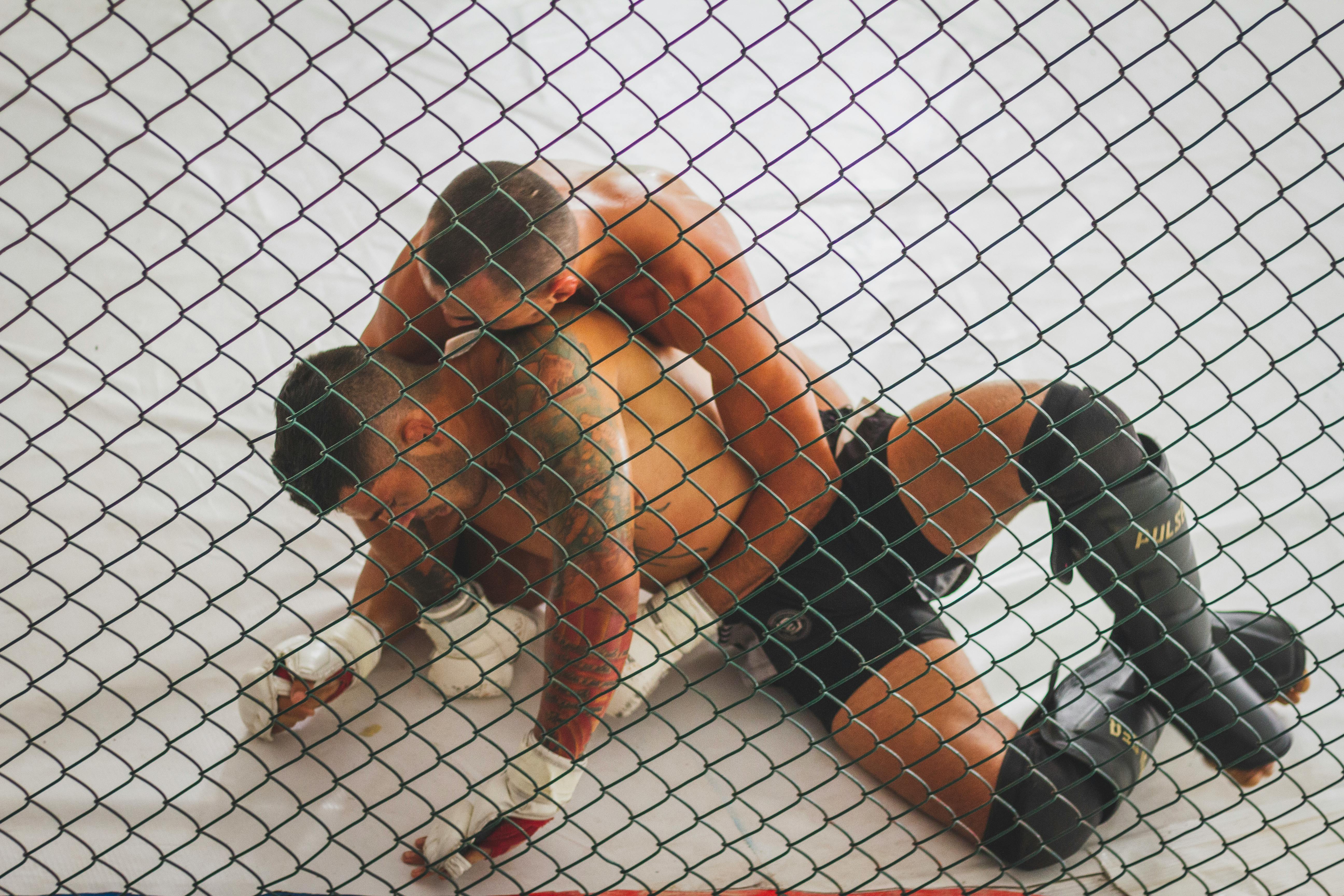
One of the most data-backed edges in all of UFC betting involves simply understanding how weight class affects finishing rates — and betting accordingly. The physics are intuitive: heavier fighters hit harder, and harder hits create more stoppages. But the statistical reality of this principle is staggering enough that it should fundamentally reshape how you approach Over/Under and method-of-victory markets.
The heavyweight division has historically produced finish rates approaching or exceeding 70% of all fights — with knockout victories accounting for nearly half of all heavyweight bouts ever contested. When you are betting Over/Under rounds at heavyweight, you are fighting against enormous historical probability when you take the Over. The human body at 265 pounds simply cannot absorb the same volume of clean strikes that a flyweight can, and one clean connection from a heavyweight generates enough force to end a contest instantly. A simple, sound long-term approach for beginners is to bias heavily toward finish outcomes — particularly knockout — in heavyweight and light heavyweight fights.
On the opposite end of the spectrum, divisions below welterweight — strawweight, flyweight, bantamweight, and featherweight — historically produce far lower finish rates. Early 2026 data reinforces this trend dramatically, with fights in these lighter divisions going the distance at an 80% rate in a recent sample. Fighters in these weight classes generate less knockout power by nature of their size, and many of the world's best submission grapplers compete at these lighter weights, where technical jiu-jitsu and wrestling tend to produce longer, more tactical fights that go to the judges.
Welterweight occupies a fascinating middle ground that has shown a striking trend in 2026, with fights at 170 pounds ending particularly early — two of four welterweight fights ending in under 1.5 rounds in a recent sample. This is a weight class with enough power to produce vicious early stoppages combined with elite-level wrestling and submission grappling, creating explosive matchups where momentum swings can end a fight before the second round begins. Understanding these weight-class tendencies and building them into your Over/Under and method-of-victory analysis is one of the simplest and most reliable edges available to a beginning bettor.
Finding Underdog Value in UFC Markets
If there is one principle that separates sophisticated UFC bettors from recreational fans, it is this: underdogs in MMA win at a dramatically higher rate than underdogs in any traditional team sport. This is not an opinion — it is a mathematical reality rooted in the nature of individual combat. Any single clean strike, any tight submission grip, any perfectly timed takedown can end a UFC fight in seconds regardless of how dominant one fighter has been through the rest of the bout. The entire skill differential between a -400 favorite and a +300 underdog can be erased by one moment of imprecision. That structural reality creates persistent value on the plus-money side of the ledger.
The mechanics of why public betting drives underdog value in UFC are worth understanding. Recreational bettors gravitate toward recognizable names, exciting knockout artists, and undefeated records. When a popular or highly-publicized fighter is involved, the public money floods in on their side and pushes the line further in their direction — sometimes well beyond what the true probability of the matchup justifies. A lesser-known opponent with a style that precisely targets the popular fighter's weakness can be sitting at +250 or +300 when their actual chance of winning might be closer to 40%. That gap between market-implied probability and true probability is pure edge, and it is exploited consistently by the sharpest minds in UFC betting.
There are specific scenarios where underdog value tends to be consistently strongest. A fighter with fewer career wins but demonstrably higher quality of competition experience often offers strong value against a heavily-marketed favorite with an undefeated record built against weaker opposition — the first real high-level test for that favorite is a dangerous betting scenario. Similarly, a fighter who carries excellent cardio and a strong late-round game is often undervalued when facing an explosive, power-based opponent whose gas tank has shown signs of depletion in longer fights. The market prices early finishes accurately; it frequently misprices the probability of later rounds.
Avoiding the trap of betting every underdog is equally important. Plus-money on the board does not automatically mean plus-money is value. A fighter listed at +450 might be there because they genuinely have a 15% chance of winning — the market has priced them accurately, and there is no edge. The question to ask is always: do I believe this fighter's true probability of winning is meaningfully higher than what these odds imply? If the answer is yes and you have done the matchup research to back that belief, the underdog becomes an intelligent bet. If the answer is 'they seem cheap and I like upsets,' you are not betting — you are gambling on instinct.
Live In-Fight Betting: The Most Powerful Edge in MMA
Live UFC betting is unlike any other form of sports wagering because the odds move not on a gradual curve but in explosive, violent lurches. A single knockdown, a perfectly executed takedown, or a visible cut above a fighter's eye can move the odds 150 to 200 points in under thirty seconds. This volatility, which terrifies inexperienced bettors, is precisely the condition that creates the richest opportunities for a disciplined, attentive in-play bettor.
The core live betting principle is to identify moments where the market has overreacted to an in-fight development relative to the actual remaining probability distribution of the fight. Consider a scenario where a heavy favorite gets dropped late in the first round by a lucky punch. The live odds instantly spike — the favorite might move from -250 to +120 mid-round. But if you have studied this fighter's chin, their history of recovering from knockdowns, and their superior conditioning and grappling over the course of a full fight, that +120 on the favorite may represent tremendous value that the panic-selling market has created. Patience and preparation are what allow you to execute on those moments.
There are several specific in-fight reads that sharp live bettors pay close attention to. Leg kick accumulation is one of the most underappreciated tells — a fighter absorbing repeated calf kicks or thigh kicks in the first round will typically slow down significantly in the second and third, as the muscle damage compounds and their lateral movement deteriorates. If you see a striker taking clean leg kicks without defending them, betting on their opponent to control or finish later rounds can offer excellent live value. Similarly, watching for early fatigue — a fighter breathing heavily through their mouth, dropping their hands, or slowing their punch output by round two — is a major signal about the fight's trajectory.
One advanced live strategy that experienced MMA bettors use involves pre-identifying fights where two fighters have roughly equivalent skill sets but very different momentum profiles — one fighter tends to start fast and fade, while the other is notoriously slow to warm up but dominates later rounds. Watching the first round play out and betting on the late-round specialist once their slow start has inflated their odds is a systematic, repeatable approach that requires research but rewards disciplined execution.
UFC Bankroll Management for Beginners
No section of this guide is more important than this one. Not the odds explanation, not the matchup analysis, not the underdog strategy — nothing matters as much as your relationship with money management, because all of those other skills become irrelevant if a cold streak or a single bad night wipes out your entire betting fund. In a sport as unpredictable as UFC, bankroll discipline is not a nice-to-have. It is the foundation upon which every other strategy rests.
The flat-unit system is the correct approach for every beginning UFC bettor and should remain your method until you have logged hundreds of documented bets and developed a statistically meaningful track record. The unit concept works as follows: you designate one unit as a fixed percentage of your starting bankroll — ideally 1% for beginners, with a maximum of 3% even for more confident plays. If your starting bankroll is $500, one unit is $5. Every single bet you place is measured in units, and your standard bet size is one unit regardless of how confident you feel about a fight. This removes emotional sizing from the equation entirely.
The reason flat betting at 1% to 3% is so critical in UFC specifically comes back to variance. Even the sharpest professional MMA bettors experience losing streaks of seven, eight, or ten fights in a row — not because their analysis is flawed, but because MMA is genuinely and irreducibly unpredictable at the individual event level. By sticking to 1% units, a brutal 10-fight losing streak leaves 90% of your bankroll intact. You can absorb that variance, continue placing informed bets, and allow your edge to express itself over a larger sample size. The bettor who sized 10% per fight in that same stretch is either broke or badly compromised and desperate — both psychological states that lead to further poor decision-making.
Tracking every single bet you place is not optional — it is the only way to know whether your strategy is actually working. Log the date, the fight, the odds at the time of placement, the amount wagered in units, and the result. After 50 or more documented bets, review your records and look for patterns: Are you performing better on certain weight classes? Are you consistently profitable on underdogs but losing on favorites? Are your Over/Under reads accurate? This data-driven self-assessment is what separates a bettor who is genuinely improving from one who is simply getting lucky or unlucky without understanding which.
Line Shopping and Timing Your Bets
One of the most straightforward and underutilized edges available to any UFC bettor is using multiple sportsbooks to find the best available odds on a given fight. This practice, called line shopping, costs nothing but a few minutes of effort and can add meaningful value to your results over time. The same fighter listed at +165 on one platform may be listed at +190 on another — a difference that, compounded across dozens of bets per year, represents a significant return on zero additional analytical effort. Maintaining active accounts at two or three major licensed sportsbooks is the baseline minimum for any serious UFC bettor.
The timing of when you place your bets also carries real strategic significance. UFC fight odds are typically posted days or weeks before an event, and the opening line — the initial price set by sportsbooks when relatively little public money has entered the market — often reflects the most technically accurate assessment of a fight's probability. Early sharp bettors and professional handicappers move these lines before the public betting wave arrives, and sometimes the best value on a given fighter exists in that early window before mainstream attention inflates action on the more popular side. Conversely, waiting until the 24 to 48 hours before a fight can occasionally reveal value as well, particularly if injury news, weigh-in observations, or notable line movement in an unexpected direction has emerged.
Understanding line movement is a skill in itself. When a line moves significantly from its opening price — for example, a fighter opens at +200 and tightens to +140 — that movement signals where the professional or high-volume money has gone. If a fighter's odds shorten despite the public betting heavily on their opponent, that reverse line movement is one of the strongest signals in sports betting that sharp money is backing the fighter whose odds are moving in their favor. You do not need to blindly follow line movement, but you should always be aware of it and factor it into your pre-fight analysis.
The Biggest Mistakes Beginner UFC Bettors Make
Betting with your heart instead of your head is the single most costly mistake in UFC wagering, and it is one that recreational bettors almost universally commit without recognizing it. If you have a favorite fighter, an emotional investment in a particular outcome, or a tribal connection to a team, gym, or country that a fighter represents, you will unconsciously seek out evidence that confirms what you want to believe and dismiss evidence that contradicts it. The solution is not to avoid betting on your favorite fighters entirely — it is to consciously apply extra scrutiny to any bet where your emotional bias could be distorting your analysis. Ask yourself honestly: would I still make this bet if a stranger's name were on the fighter I am backing?
Overcomplicating your bet selection with parlays is another trap that catches almost every beginning bettor. The allure of a three-leg or four-leg parlay is the large combined payout — a $20 bet that returns $200 feels like genius when it hits. What most beginners do not internalize is the mathematical reality that each additional fight added to a parlay dramatically reduces the probability of the entire ticket cashing. Remember that favorites won 72% of their fights in 2024 — even with that favorable base rate, stringing three separate favorites together in a parlay creates meaningful failure probability, and the house's vig compounds on every leg. Parlays should be a small, occasional bet type, not the core of your UFC wagering strategy.
Chasing losses is arguably the most psychologically destructive pattern in sports betting and is especially dangerous in UFC, where the emotional intensity of the sport makes it easy to get swept up in the desire to win back what you just lost. After a bad beat — a late stoppage, a wild upset, a bad judging decision — the temptation to immediately fire another larger bet to recover is nearly universal and almost always catastrophic. The discipline to close your betting app after a losing night, step away, and return the next fight card with a clear head and fresh analysis is not weakness. It is the habit that separates bettors who last from those who flame out.
Neglecting the injury and late-notice replacement landscape is a tactical error that costs bettors real money with regularity. A fighter who suffered a rib injury in their last training camp, a fighter who stepped in on 10 days' notice to replace an injured opponent, or a fighter who visibly struggled to make weight and appeared dehydrated at the weigh-in are all fundamentally different propositions than the versions of those fighters reflected in their pre-fight odds. Following official UFC announcements, credible MMA journalists, and available weigh-in footage in the days leading up to a fight card is a minimal-effort research habit that can reveal significant value others have missed.
❓ Frequently Asked Questions
What is the easiest UFC bet type for a complete beginner?
The moneyline is the ideal starting point for beginners. You simply pick which fighter wins the bout — no spreads, no point totals, no complexity. Once you are comfortable reading American odds and identifying favorites versus underdogs using the minus and plus signs, the moneyline gives you a clean, focused market to develop your analysis skills before moving into more complex bet types like method of victory or round betting.
How much of my bankroll should I bet on a single UFC fight?
Beginners should risk no more than 1% to 3% of their total bankroll on a single UFC fight. Because MMA is far more volatile than team sports — a single punch can end any fight regardless of skill gap — losing streaks of 7 to 10 fights are not uncommon even for knowledgeable bettors. At 1% per fight, a 10-fight cold streak leaves 90% of your starting capital intact. Never increase your unit size based on confidence in a single fight. Flat, disciplined betting is the only approach that survives the inherent variance of the sport.
Are underdogs worth betting on in UFC?
Yes — underdogs in UFC win at a significantly higher rate than underdogs in major team sports because individual combat is inherently volatile. Any single moment can end a fight regardless of overall skill differential. However, not all underdogs represent value. The key question is whether the fighter's true probability of winning is meaningfully higher than what the plus-money odds imply. If you have done the matchup analysis and believe a +220 underdog has a genuine 35 to 40% chance of winning, that represents value. If you are simply attracted to plus-money without analytical justification, you are gambling rather than betting.
How important is fighting style when analyzing UFC bets?
Fighting style is the single most important analytical variable in UFC matchup research — more important than records, rankings, or recent results in isolation. The interaction between two fighters' skill sets often determines the fight more reliably than any other factor. A wrestler with excellent takedown volume facing a striker with historically poor takedown defense is not a competitive matchup in the way the rankings might suggest. Understanding whether a fighter leads with their wrestling, their striking, or their submission grappling — and whether those tools match up favorably or unfavorably against their specific opponent — is the foundation of sharp UFC analysis.
Is live in-fight betting a good strategy for beginners?
Live betting is powerful but demands discipline and preparation. It is not ideal for complete beginners who are still learning to read fight dynamics in real time, because the speed of odds movement requires quick, informed decisions under pressure. A reasonable approach is to watch your first several live UFC events purely as an observer — noting where the live odds move, what in-fight developments drove those movements, and where you would have found value in hindsight. Once you have built that observational foundation, you can begin placing small live bets in situations where a clear overreaction to a temporary momentum shift creates value on a fighter you have already researched pre-fight.
Does weight class affect how I should bet on UFC fights?
Absolutely — weight class is one of the most data-supported factors in UFC betting strategy. Heavyweight and light heavyweight fights historically finish at dramatically higher rates than lighter divisions, making Under round totals and finish-oriented method-of-victory bets strong long-term approaches in those divisions. Conversely, divisions below welterweight — flyweight, bantamweight, featherweight, and strawweight — go to the judges' scorecards at far higher rates, making Over round totals and decision outcomes more statistically sound bets in those matchups. Building weight-class tendencies into your pre-fight analysis gives you an immediate, data-backed foundation for your Over/Under research.
What is line shopping and why does it matter?
Line shopping means checking the odds on the same fight across multiple licensed sportsbooks to find the best available price. Because different sportsbooks set and adjust their lines independently, the same fighter can often be listed at meaningfully different odds across platforms — for example, +165 at one book and +195 at another. Consistently getting the best available line on your bets, even when the difference seems small in any single wager, compounds into a significant advantage over the course of a full betting season. Maintaining accounts at two or three reputable sportsbooks and taking five minutes to compare lines before placing any bet is one of the easiest free edges available to any UFC bettor.
Conclusion
UFC betting is not a lottery ticket or a shortcut to easy money. But it is one of the most rewarding and genuinely skillful betting markets available to anyone willing to invest the time to understand the sport deeply. The foundation you have built through this guide — understanding how odds encode probability, recognizing where weight-class data gives you a structural edge, learning how to analyze fighting styles rather than just records, and treating your bankroll with the discipline it deserves — is more than most casual bettors ever develop.
Start small, document everything, and approach every fight card as a research exercise before it becomes a financial one. The bettors who build lasting, profitable relationships with UFC wagering are not the ones who go all-in on a gut feeling and get lucky. They are the ones who stay disciplined through losing streaks, continuously improve their analytical process, and find genuine edges in the matchups rather than emotional justifications for wishful thinking. The octagon rewards preparation. So does the betting market that surrounds it.
Disclaimer: This article is intended for educational and informational purposes only. Sports betting involves financial risk. Always gamble responsibly, within your means, and in compliance with the laws and regulations of your jurisdiction. If you or someone you know has a gambling problem, please seek help through a licensed support service.
FREE STATS & STAKING TRACKER
Log your bets, track CLV, and manage your bankroll like a pro with our institutional-grade tracking tool.
OPEN FREE TRACKER