How to Bet on Cards in Football/Soccer (2026): A Comprehensive Guide

💡 Key Takeaways
- Booking points assign 10 points per yellow card, 25 per straight red, and 35 for a two-yellow-card red — understanding this scoring framework is the foundation of card betting.
- Referee profiling is the single biggest edge in card betting: some officials average over 4.5 yellow cards per match while others average under 2.5 — knowing who is in charge shifts your entire pre-match strategy.
- Match context matters enormously: derby matches, relegation six-pointers, second-leg knockouts, and games where one team needs to protect a narrow lead statistically produce far more cards than neutral fixtures.
- South American leagues — especially Bolivia, Peru, and Panama — produce the highest card volumes globally, with Bolivia averaging close to 8 cards per match across recent seasons.
- Live/in-play card betting is arguably the most profitable entry point: watching the first 20 minutes to gauge referee tone and tackle frequency before placing a bet on cards gives you information the pre-match line did not have.
- Never bet card markets in isolation — cross-reference referee stats, team discipline data, player foul rates, match stakes, and head-to-head history before placing any card bet.
📑 Table of Contents
- What Are Cards in Football and Why Do They Matter for Betting?
- The Booking Points System: Football's Most Misunderstood Market
- Every Type of Card Betting Market Explained
- How to Analyze Referees Like a Professional Bettor
- Team and Player Statistics That Drive Card Betting Edge
- Match Context: Identifying High-Card Fixtures Before Kickoff
- Which Leagues and Competitions Produce the Most Cards?
- Live Betting on Cards: Timing Your In-Play Edge
- Advanced Card Betting Strategies: Finding Value the Bookmakers Miss
- Bankroll Management for Card Betting
Card betting is one of the most underexploited and misunderstood markets in all of football wagering — and that is precisely why sharp bettors love it. While the masses are piling money onto match results, over/under goals, and accumulators, a quieter, data-driven segment of the betting community is consistently finding value in yellow cards, red cards, and the booking points system that ties them together.
Unlike predicting goals — which can hinge on a deflection, a howler from a goalkeeper, or a moment of individual brilliance — card betting is driven by structural, repeatable patterns: referee personality, team playing style, tactical aggression, rivalry intensity, and match stakes. These factors are measurable, historical, and largely independent of which team wins or loses. A notoriously aggressive team picks up bookings whether they finish mid-table or are chasing a title. A strict referee issues cards whether it's a derby or a dead-rubber.
This guide gives you the complete, unfiltered, professionally-researched framework for betting on cards in football and soccer in 2026. From understanding the booking points system in granular detail, to profiling referees like a professional data analyst, to identifying the exact match types and leagues where card markets are most mispriced — everything you need is right here.
What Are Cards in Football and Why Do They Matter for Betting?
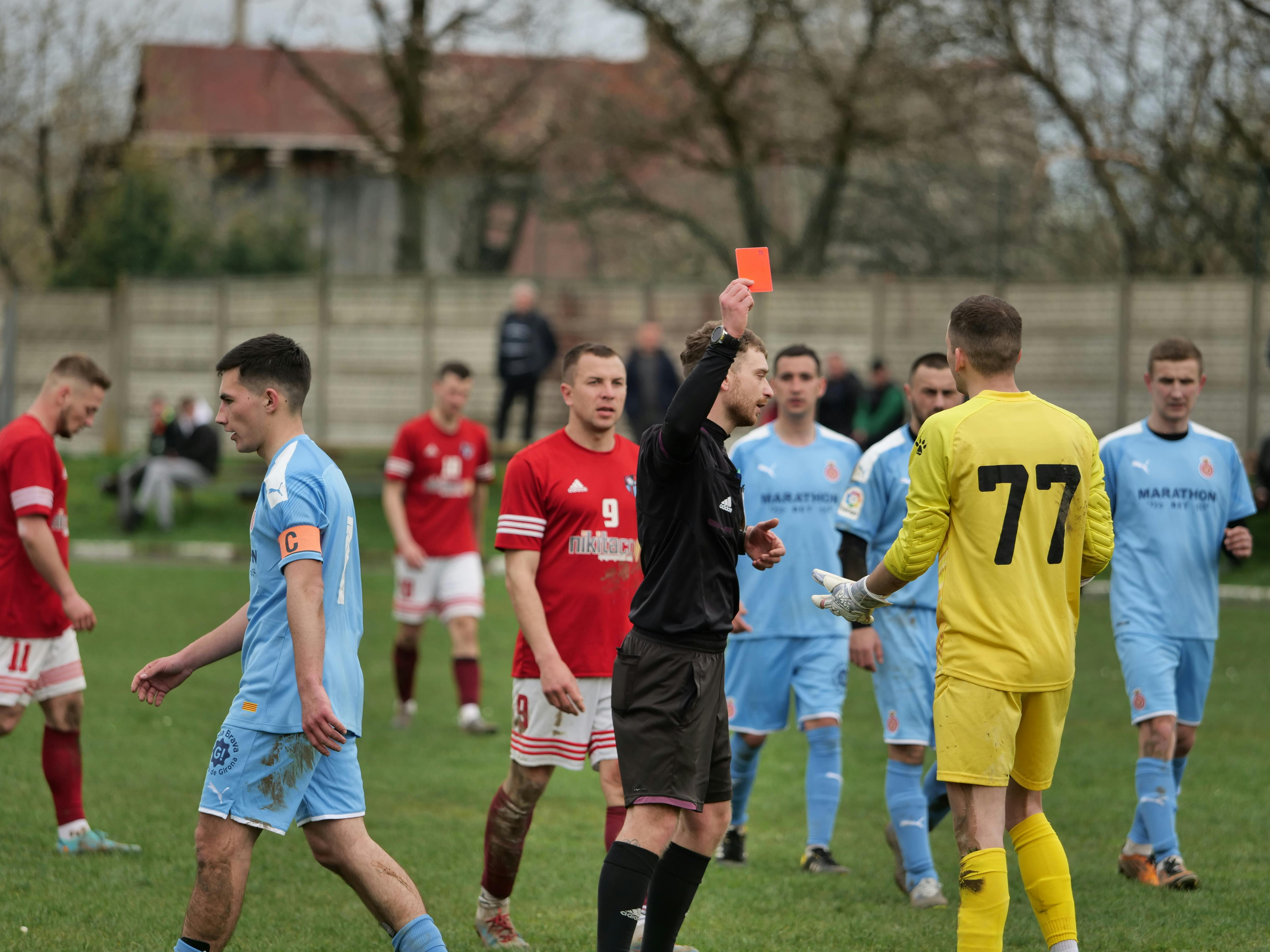
To bet intelligently on cards in football, you must first understand what they represent at a structural level — not just as a casual fan, but as a data-literate bettor. A yellow card is a formal disciplinary warning issued by the referee for offenses including reckless tackles, deliberate handball, persistent infringement, dissent, time-wasting, and unsporting behavior. Its significance is twofold: it signals a disciplinary event within the match, and it carries a cumulative suspension risk for players who accumulate a set number across a season.
A red card — which results in immediate ejection and forces the team to play with ten men — comes in two forms. A straight red card is awarded for serious foul play, violent conduct, deliberate handball to deny a goal, or a last-man tackle denying a clear goal-scoring opportunity. A second yellow card results in an automatic red, which is known as a double-booking. In booking points markets, this double-booking scenario is treated uniquely, assigning a combined total that reflects the two separate events.
From a betting standpoint, cards are powerful because they are structural rather than random. Goals require a ball to cross a line — a singular, unpredictable event. Cards, by contrast, emerge from the consistent collision of referee personality, tactical fouling culture, and match intensity. A central midfielder who averages a foul every 22 minutes across a season is going to keep committing fouls in the next match. A referee who averages 4.8 yellows per game across 30 Premier League appearances is going to keep issuing them at a similar rate. This structural predictability is what makes card markets exploitable for bettors who invest the time in proper research.
The betting shift toward card markets has accelerated significantly in recent years. As stats outlets have dramatically increased the volume of disciplinary data available to the public — covering everything from fouls per 90 minutes and foul type breakdowns to individual referee profiles — bookmakers have expanded their card market offerings accordingly. This has created a richer but also more competitive landscape, making it critical that bettors move beyond surface-level intuition and anchor their picks in verifiable data.
The Booking Points System: Football's Most Misunderstood Market
Booking points is the numerical framework most major bookmakers now use as the backbone of their card betting markets. Rather than simply counting the raw number of yellow and red cards shown, booking points assign a weighted score to each disciplinary event, creating a continuous, granular measure of how much disciplinary action occurred in a match. Once you understand this system, every card betting market — from match totals to team-specific lines — becomes far clearer.
The scoring system is largely standardized across the industry. A single yellow card earns 10 booking points. A straight red card — awarded without any prior yellow — earns 25 booking points. A double-booking, where a player receives two yellow cards in the same match and is consequently sent off, earns a combined 35 booking points. This 35-point figure accounts for the first yellow (10 points) plus the red that follows (25 points). Critically, the maximum that any single player can contribute in one match is 35 booking points, regardless of the sequence of events. Cards shown to coaches, managers, or technical staff are not counted in the official points tally — only cards issued to players actively participating on the pitch are included.
To illustrate how this works in practice, consider a match that sees four yellow cards, one double-booking (two yellows to a single player leading to a red), and one straight red: the four individual yellow cards contribute 40 points, the double-booking contributes 35, and the straight red contributes 25, for a match total of 100 booking points. Under a raw card-count market, this same match would be recorded as having seven cards. The booking points figure, by weighting reds more heavily than yellows, gives a more accurate picture of the severity of disciplinary action. This is why booking points are generally considered the superior framework for analytical card betting — they reward you for correctly predicting not just the number of incidents, but their relative severity.
Bookmakers typically offer booking points lines ranging from as low as 20 points (effectively betting on whether there will be any cards at all) to over 80 points for high-intensity fixtures. The most common lines you will encounter are Over/Under 30.5, 35.5, 40.5, 45.5, and 50.5 booking points. Some bookmakers also offer banded or range markets — for example, betting that the total booking points will fall between 21 and 45 — which can occasionally offer better value than a straight Over/Under line. First-half booking points markets are also available, and these can be particularly sharp for bettors who have identified referees or teams that tend to start aggressively.
Every Type of Card Betting Market Explained

The range of card betting markets available at major sportsbooks has expanded dramatically, and understanding each market type — including its specific betting logic, settlement rules, and ideal use case — is essential before placing a single wager. Treating these as interchangeable is one of the most common errors card bettors make.
The Total Cards Over/Under market is the most accessible entry point. Here, you are simply wagering on whether the combined number of yellow and red cards shown across both teams will exceed or fall short of a set number — typically a half-number like 3.5, 4.5, or 5.5 — which eliminates the possibility of a push. This market counts every card equally, regardless of color. It is straightforward, widely available, and ideal for bettors who want a clean read on whether a game will be high or low discipline, without factoring in severity.
The Total Booking Points Over/Under market follows the same structural logic but uses the points-weighted system described above. Because it distinguishes between yellows and reds, it is a more precise and analytical market. If you are backing a high-card game but believe most of those cards will be yellows rather than reds, the Total Cards market will serve you better. If you think reds are genuinely likely — perhaps due to a particularly aggressive head-to-head history or a known hothead player — the Booking Points market amplifies that edge.
Player to Be Carded markets allow you to bet on a specific named player receiving either a yellow or a red card in the match. This is among the highest-edge card markets available because bookmakers typically price these lines on relatively thin historical data, and bettors who have tracked individual player foul rates, positional matchup dynamics, and suspension pressure in granular detail can genuinely identify mispriced lines. Combative central midfielders, defensive wingers tasked with man-marking elite attackers, and full-backs up against explosive wide players are historically the most bookable positions. Players returning from suspension — who may be at risk of overcaution but also sometimes play recklessly in frustration — are worth monitoring closely.
The First Player to Be Carded market narrows the player prop down to a single moment — predicting which player on the pitch will receive the first booking of the game. The odds are longer because the outcome is more specific, but the same analytical approach applies. High-press teams that put the first foot in, or teams that kick off with an aggressive defensive setup, tend to generate first-card situations in the opening 15 minutes. Combined with a strict referee, this can be a highly readable market.
Team Card Handicap markets apply a virtual card adjustment to account for perceived imbalances in how many cards each team is expected to receive. For example, if a relegation-threatened team is given a +1.5 card handicap against a technical top-four side, the physical underdog would need to receive only the same number of cards or more, adjusted for the handicap, for the bet to win. This market is particularly useful in fixtures where one team's style strongly favors more disciplinary action. Both Teams to Receive a Card is a simple Yes/No market asking whether both sides will be booked before the final whistle — it is popular in bet builders and offers reasonable value in fixtures with two physically assertive teams under a strict referee. Race to X Cards and First Half Total Cards markets round out the catalog, each offering increasingly specific angles that reward detailed pre-match analysis.
How to Analyze Referees Like a Professional Bettor
Referee profiling is the single most powerful edge available in card betting, and it is systematically underused by recreational bettors. The reason it works is simple: referees are not interchangeable. Their decision-making styles, tolerance thresholds for dissent, and historical patterns around card issuance are remarkably consistent over time. A referee who averaged 4.8 yellow cards per game across the last two seasons does not suddenly become a lenient official. These tendencies are the product of temperament, interpretation of directives, and match management philosophy — and they persist.
The first metric to study is a referee's average yellow cards per 90 minutes across all matches they have officiated in the current and previous season. In the 2025/26 Premier League season, the league-wide average sits at approximately 3.8 yellow cards per match. However, the spread among individual referees is enormous. Some officials average well over 4.5 yellows per game while others consistently operate under 3.0. When a referee sitting at the high end of that spectrum is appointed to a fixture between two physical, high-foul teams, the bookmaker's standard line of Over 3.5 cards may actually represent significant value.
Beyond yellow card averages, you should track each referee's straight red card issuance rate, their tendency to produce first-half bookings versus second-half bookings, and their behavior in high-stakes matches specifically. Some referees tighten up in derby games and issue cards earlier to assert authority. Others tend to let the first 20 minutes go and then clamp down sharply, meaning the first-half card market may be underpriced for the second half and vice versa. The minute at which a referee issues their first card in a match — averaged across multiple fixtures — is a surprisingly powerful piece of data that very few recreational bettors track.
An important consideration for the 2025/26 season specifically is the ongoing directive from English football's refereeing body PGMOL around player behavior management and dissent. Following a deliberate clampdown that began in 2023/24 — which produced the highest card-per-game average in Premier League history at 4.53 — referees have continued to operate with a heightened focus on time-wasting and verbal dissent. Bookings for dissent alone jumped by dozens of instances in that initial season, and while the rate has moderated slightly in 2025/26, the structural tendency toward higher cards counts versus pre-2023 seasons remains intact. This means that historically based lines set by bookmakers using older baseline data may systematically underestimate the true card probability.
Referee assignment information is typically released by league governing bodies 24 to 72 hours before a match. Building a workflow around checking referee assignments as part of your pre-match routine — and cross-referencing the assigned official against your documented referee profiles — will consistently surface betting opportunities that purely result-focused bettors never see.
Team and Player Statistics That Drive Card Betting Edge
Referee profiling tells you how strictly a game will be managed. Team and player statistics tell you how much raw material — in the form of tackles, fouls, and confrontations — will be presented to that referee. Both sides of the equation must be researched thoroughly. Betting heavily on cards because a strict referee is in charge, without confirming that the teams themselves are prone to disciplinary action, is only half the analysis.
At the team level, the most important metrics are fouls committed per 90 minutes, average yellow cards received per game across the current season, average yellow cards received in home versus away fixtures (some teams transform their aggression levels based on venue), and historical card records against specific opponent types — particularly against teams that press high, create many transitions, or deploy pacey attackers who force desperate tackles from defensive lines. Teams that press aggressively themselves also tend to concede more fouls because their high defensive line creates urgent recovery situations.
Chelsea have been the most booked team in the Premier League across recent seasons, setting a single-season record of 105 yellows and four reds in 2023/24, then following that up with 101 cards across 2024/25 — the fourth highest single-season total in the competition's history. On the other end of the spectrum, possession-dominant teams that control games through technical quality rather than defensive aggression — historically including Manchester City's peak Guardiola era sides — have consistently produced lower card totals. Understanding where teams fall on this spectrum, and updating that understanding as managers change or tactical setups shift, is foundational to team-level card analysis.
At the player level, the metrics to build a database around are fouls committed per 90 minutes, yellow card issuance rate across the season, position and role (defensive midfielders and physical full-backs are consistently the most bookable positions), and current suspension threshold status. A player on three yellow cards heading into a game where accumulation of a fourth triggers a ban plays that fixture under a cloud of tension — and depending on the player's character and importance, this either suppresses their aggression (reducing card likelihood) or creates a situation where emotional play leads to an early booking. Knowing which applies to a given player is part of the qualitative overlay that separates good card bettors from great ones.
Foul type data, where available, adds another layer. There is a meaningful difference between a player who commits many fouls but most are low-severity possession challenges and a player whose foul pattern involves high-risk tackles in dangerous situations. The latter is statistically more likely to receive a yellow or red card per foul than the former, because referee intervention is shaped by foul location, game state, and apparent intent.
Match Context: Identifying High-Card Fixtures Before Kickoff

Beyond the quantitative layers of referee stats and team data, match context provides a qualitative overlay that can meaningfully push a fixture toward higher or lower card probability. The best card bettors develop a mental framework for categorizing fixture types based on their structural propensity for discipline, and they apply this framework to every game on their slate before checking a line.
Derby matches are the most reliable context trigger for elevated card counts. The combination of personal rivalry, high local stakes, intense tactical aggression, and crowd pressure creates an environment where fouls occur at a higher rate, dissent is more common, and referees face an almost impossible task maintaining control. The Merseyside derby between Liverpool and Everton historically leads the Premier League's red card statistics. El Clasico between Real Madrid and Barcelona, the North London Derby between Arsenal and Tottenham, and the Manchester derby are all consistently above-average card fixtures. Across many seasons of data, these matchups show a structural tendency for higher booking totals regardless of which teams are stronger in a given year.
Relegation six-pointers and survival deciders represent another category where cards spike. Teams fighting to avoid the drop play with a physical urgency that tactical composure alone cannot sustain. Desperate lunges, time-wasting, and confrontational behavior are the direct product of existential pressure, and referees invariably respond by reaching for the card more frequently. Research across multiple European leagues consistently supports the finding that matches where both teams are in the bottom third of the table produce above-average yellow card totals.
European knockout second legs — particularly when one team is defending a narrow first-leg lead — are historically fertile ground for card bettors. The attacking team presses at high intensity, the defending team fouls to break rhythm, and the emotional tension of a single-elimination contest produces confrontation. Matches where a team is chasing a one-goal deficit after 70 minutes produce some of the highest late-game foul rates in football, creating excellent in-play card opportunities.
Conversely, there are fixture types that structurally suppress cards. Meaningless end-of-season games where both teams have nothing to play for frequently produce below-average card totals. Top-versus-bottom fixtures where the dominant team controls possession at will, negating the need for the inferior team to tackle desperately, can also trend under. Pre-international break games where managers rotate heavily are another low-card environment, as fringe players are less familiar with the tactical intensity expected at the highest level. Identifying what a game means to both teams before placing a card bet is not optional — it is essential.
Which Leagues and Competitions Produce the Most Cards?
One of the most consistent and exploitable findings in card betting research is the dramatic variation in disciplinary rates across different leagues and competitions. Understanding where cards are most and least prevalent allows you to calibrate your baseline expectations before you ever look at a specific fixture.
South American football sits at the absolute top of the global card hierarchy. Bolivia leads all tracked leagues globally with an average approaching 8 cards per match in recent seasons — an extraordinary figure that means approximately 98% of Bolivian league games end with over four cards. The Peruvian and Panamanian leagues follow closely behind. The cultural and playing style factors underlying these numbers are well-documented: physical play is both tactically normalized and emotionally charged at a level beyond what European officiating cultures tolerate. For bettors operating in these markets, Over 3.5 cards is often a near-lock statistical position, though bookmakers are increasingly aware of this and price the line accordingly.
Among the top five European leagues, La Liga in Spain and Serie A in Italy produce the highest card volumes. La Liga in particular is notable for having multiple teams that average over two yellow cards per game, and it is the only top-five European league where the typical match-level card total approaches the five-card range. The Bundesliga in Germany and Ligue 1 in France sit in the middle of the European card spectrum. The Premier League, despite recent years trending upward, remains at the lower end of European elite card averages — English refereeing culture has traditionally tolerated more physical play before issuing cards, though the post-2023 PGMOL directives have meaningfully shifted this trend.
The 2024/25 Premier League season averaged 4.34 cards per game — only the second season in 15 years to exceed four on average — following the record-breaking 2023/24 campaign that averaged 4.53. The early weeks of a new Premier League season have historically produced the highest matchday card totals, as referees apply pre-season directives with maximum intensity before calibrating to player responses. Matchday four of the 2024/25 season alone produced 65 yellow cards — a single-matchday record. Bettors who specifically target the opening five or six matchdays of the Premier League season with Over card bets have historically found above-average value in this seasonal pattern.
In European club competition, the Champions League and Europa League knockout stages produce elevated cards due to the elimination pressure dynamic described earlier. Group stage games between teams with large ability differentials tend to produce fewer cards, as the stronger team controls possession and the inferior team defends compactly rather than desperately. International tournament football — including the World Cup and European Championship — tends to moderate card averages in early group stages but spike sharply in knockout rounds, where careers and national pride are on the line. The infamously aggressive Netherlands versus Argentina World Cup quarter-final in 2022 produced a booking points total that would have cleared virtually every Over line available at major bookmakers.
Live Betting on Cards: Timing Your In-Play Edge
Live betting on cards is, for many experienced practitioners of this market, the most profitable entry point of all. The reason is information asymmetry: within the first 15 to 20 minutes of a match, you can directly observe the referee's actual tone in real time — rather than relying on historical averages. If a referee that you profiled as strict issues two yellows before the 18th minute, you have direct confirmation that the line you projected pre-match is already materializing. If a referee you expected to be lenient has already let three ugly challenges go without a card, the data you are seeing in real time is more valuable than any historical sample.
The primary in-play card betting strategy is foul accumulation monitoring. Football analytics platforms and live match trackers provide real-time foul counts. If a game reaches the 30-minute mark with eight or more combined fouls and zero cards shown, you are watching a match where the first card is statistically overdue — particularly under a referee with an average cards-per-game rate above 4.0. The odds on the next card or on the match Over total will still reflect some uncertainty, but your live observation gives you confirmation bias removal: you are not guessing the game will be physical; you are watching it be physical.
Game state is equally important in live card betting. The most reliable in-play card trigger is a team defending a one-goal lead in the second half — particularly from the 65th minute onward. Teams protecting a narrow lead foul with increasing frequency as the clock runs down, targeting physical disruption over tactical containment. Full-backs who are being beaten on the dribble regularly will begin to commit cynical fouls rather than risk giving up a cross. Central midfielders will stand in the path of quick transitions and take the yellow card. If you are watching a match where the leading team's defensive structure is visibly struggling, and the referee has already demonstrated card willingness in the first half, the Over booking points total often offers live value that the pre-match line did not fully capture.
Red card live betting operates by a different logic and requires specific pattern recognition. Straight red cards are inherently volatile events — a single poorly timed tackle by an identified hothead, a goalkeeper rushing off their line in a one-on-one, a last-man foul — and they can occur without strong warning signs. However, there are match situations where red card probability meaningfully elevates: a player who has already received a first yellow in the first half and must play the second half knowing one more challenge ends their night; a player with a notoriously poor discipline record in a game where their team is already losing and frustration is high; a physical confrontation or post-foul altercation that the referee has allowed to simmer. Identifying these situations and betting on the straight red or on both teams to receive a card live, at odds that still reflect the general 'unlikely' baseline, is where some of the sharpest card bettors find genuine value.
Advanced Card Betting Strategies: Finding Value the Bookmakers Miss
Moving beyond foundational research into genuine advanced strategy requires a systematic approach to identifying where bookmaker lines are structurally mispriced. Card markets are not as heavily traded as match results or goals, which means bookmakers allocate less modeling resource to them — creating windows of genuine edge for bettors who invest in proper analysis.
The first advanced strategy is referee-team interaction modeling. Rather than looking at a referee's general yellow card average and a team's general yellow card average separately, you look at what happens specifically when this referee has managed this team in the past. Some teams have a pattern of clashing with particular officials — players from those clubs may have received cards from that referee in previous meetings, creating heightened tension and faster card issuance. Others play a style that specific referees consistently let through. This intersection data is available through referee and team statistics platforms and is almost never reflected in bookmaker lines.
The second strategy is first-half versus second-half card market arbitrage. If you have identified that a particular referee is statistically a second-half card issuer — perhaps because they prefer to observe the opening 45 minutes before asserting authority, or because they tend to issue more bookings as game intensity rises toward the end — the first-half card market may be systematically underpriced for Unders while the second-half market is underpriced for Overs. These half-specific mismatches can offer consistent value across a season without requiring any special insight into specific fixtures.
Bet builder card integration is a third high-value approach. Most major bookmakers now offer same-game multi or bet builder tools that allow you to combine a card selection with a match result or goals market within a single combined bet. The key is identifying selections that are genuinely uncorrelated — or, better still, positively correlated. If you believe that a physical, defensive team is going to win a low-scoring match by defending deep and fouling aggressively, combining Under 2.5 goals with Over 3.5 cards may actually reflect reality as a correlated parlay rather than independent multiplied odds. Bookmakers are aware of correlation and attempt to hedge it in their builders, but they frequently underadjust for specific fixture types where the correlation is strongest.
Finally, suspension pressure betting is an underexplored angle. As a season progresses, some players approach yellow card accumulation thresholds that would trigger automatic bans. A player sitting on the maximum number of yellows before a ban threshold plays their next game in a disciplinary no-man's-land: the risk of picking up one more yellow and missing a key future game creates a behavioral pressure point that manifests in two opposite ways. Some players become noticeably more cautious, which suppresses their card likelihood. Others — particularly aggressive midfielders or defenders with disciplinary histories — channel the pressure into recklessness and pick up exactly the card that triggers their ban. Identifying which type a player is, based on their character and historical response to suspension pressure, is qualitative analysis that no model fully captures and that bookmakers rarely price with precision.
Bankroll Management for Card Betting
Card betting is a high-variance market. Unlike match result betting, where a single dominant performance can produce a predictable outcome, card markets can be disrupted by a single early red card that completely changes the dynamic of a game, a referee who simply has an uncharacteristically lenient night, or a physical fixture that — for reasons of game state — never escalates into the expected confrontation. This variance profile means that bankroll management for card betting requires specific calibration rather than applying standard unit sizes from other markets.
The baseline recommendation for card betting unit sizing is to treat each card bet as carrying the equivalent risk profile of a moderately confident event — and size accordingly. Professional bettors typically allocate between 1% and 3% of their total bankroll per card bet. The lower end of this range is appropriate for niche markets like first player to be carded or exact card band bets, where variance is highest. The upper end applies to Total Cards or Total Booking Points Over/Under bets where the research base is strong and multiple confirming factors align — strict referee, high-foul teams, derby context, and historical head-to-head data all pointing in the same direction.
The critical bankroll discipline for card bettors is resisting the temptation to chase losses through escalation. Because card markets can feel 'almost right' — the game was clearly physical, but the referee just happened not to book anyone — losing runs in this market can feel deeply frustrating in a way that distorts judgment. The correct response to a losing run on cards, exactly as in any other market, is to review the analytical process rather than increase stake size. Were you consistently identifying the right structural factors? Were the losing bets bad bets by process, or correct bets that simply did not convert? Only a rigorous post-bet review distinguishes genuine model failure from natural variance, and that distinction determines whether you should adjust your approach or simply continue applying it.
Tracking every card bet you place — including the market, the research factors you identified, the line you bet, the result, and the closing line value — is not optional. It is the foundation of continuous improvement. Over a sample of 100 or more card bets, patterns emerge that no amount of pre-bet analysis can reveal: a systematic tendency to overbet first-half card markets, a blind spot for lenient referee appointments, or a profitable pattern in exactly the kind of relegation-battle fixtures that your intuition has been correctly identifying. The data you generate from your own betting history is, ultimately, the most valuable data you have.
❓ Frequently Asked Questions
What is the difference between total cards and booking points?
Total cards counts every yellow and red card equally — one card is one card, regardless of color. Booking points assign a weighted value to each card: 10 points for a yellow, 25 points for a straight red, and 35 points for a double-booking (two yellows resulting in a red). Booking points are the more precise framework because they reflect the severity of disciplinary action, not just the frequency. A match with one straight red and two yellows would show three total cards but 45 booking points. For analytical bettors, booking points is the superior market.
Do manager or coaching staff cards count toward booking points?
No. Booking points markets are settled exclusively on cards shown to players on the pitch. Cards issued to managers, assistant coaches, or bench staff — regardless of their color or timing — do not count toward any booking points or total cards market at standard bookmakers. Always verify the specific settlement rules with your bookmaker before placing a card bet, as occasional operator-specific variations exist.
Are card bets settled on 90 minutes only, or do extra time and penalties count?
In the vast majority of cases, card betting markets are settled on 90 minutes of regular play plus added time, and do not include extra time or penalty shootouts. This is a critical rule to understand, because a match that goes to extra time in a knockout competition may produce additional cards that appear on screen but do not count toward your settled bet. Always check the specific market rules for each bookmaker and each competition before placing a card bet.
Which football leagues produce the most cards for betting purposes?
South American leagues lead globally, with Bolivia the highest-card league in the world — averaging close to 8 cards per match in recent seasons, with roughly 98% of games ending over 4 cards. Peru and Panama follow closely behind. Among the top five European leagues, La Liga (Spain) and Serie A (Italy) produce the most cards. The Premier League has trended upward since 2023/24 but remains on the lower end of European elite averages at around 3.8 to 4.3 yellows per game depending on the season.
How important is the referee when betting on cards?
The referee is arguably the single most important variable in card betting. Individual Premier League referees vary dramatically in their cards-per-game averages, with some consistently issuing 4.5 or more yellows per match while others hover around 2.5 to 3.0. Checking the referee appointment for any match you intend to bet on — and cross-referencing that official against your documented profile of their historical card issuance rates — is a non-negotiable step in the research process.
Can I bet on a specific player to receive a card?
Yes. Player to Be Carded markets allow you to wager on a named player receiving a yellow or red card. Player Card First markets — betting on who will receive the first booking of the game — are also widely available and carry longer odds given the additional specificity. These markets are among the best in football for analytical bettors who track individual foul rates, positional matchup dynamics, and suspension threshold pressure at the player level.
Is live/in-play betting on cards profitable?
Live card betting is considered by many experienced bettors to be the most profitable entry point in card markets, because the first 15 to 20 minutes of play provide direct, real-time information about referee tone and match physicality that pre-match lines cannot fully account for. Observing a referee issue two early bookings, or watching a game escalate into a cycle of aggressive fouling, allows you to confirm your pre-match thesis before committing your stake — or to identify value in a fixture your pre-match research flagged but you were not confident enough to back early.
What's the best bankroll strategy for card betting?
Treat card bets as moderate-confidence plays and size them at 1% to 3% of your total bankroll per bet. Use the lower end for high-specificity markets like player to be carded first and the higher end for Total Cards or Booking Points Over/Under bets supported by multiple confirming research factors. Never chase losses with larger stakes, and track every bet you place along with the reasoning behind it — the patterns in your own data are the most valuable feedback loop you have.
Conclusion: Card Betting Is a Skill Market — And That's Your Advantage
Card betting in football is not a guessing game, a gut-feel exercise, or a novelty market to add color to a weekend accumulator. It is a structured, data-driven discipline with a clear analytical framework, a set of highly predictable input variables — referee personality, team foul culture, match context, and player discipline patterns — and a bookmaking landscape that systematically underinvests in pricing these markets with the same precision it applies to goals and match results.
That underinvestment is your opportunity. Every week, referee appointments are released that trigger clear over or under value on cards lines. Every season, certain leagues and fixture types structurally generate disciplinary environments that the standard market line does not fully capture. Every match, real-time in-play dynamics unfold that confirm or contradict a pre-match thesis — and bettors who are watching with purpose can act on information that closed into the line an hour earlier.
The foundation is research. Build your referee profiles, track team and player foul data, categorize fixture types by their structural card propensity, and cross-reference all three before placing a single bet. Apply sensible bankroll management, track every wager religiously, and review your process at regular intervals. Card betting rewards patience, precision, and intellectual rigor — and those are exactly the qualities that separate profitable long-term bettors from the recreational bettors who fund the market.
Start with one league, one research framework, and consistent record-keeping. The edge in card markets is real, it is durable, and it is waiting for bettors disciplined enough to build the analytical foundation to access it.
FREE STATS & STAKING TRACKER
Log your bets, track CLV, and manage your bankroll like a pro with our institutional-grade tracking tool.
OPEN FREE TRACKER