How to Reduce the House Edge in Blackjack: The Complete Guide
💡 Key Takeaways
- With perfect basic strategy and the right table rules, the house edge in blackjack can be reduced to as low as 0.28% — the lowest of any standard casino game.
- The single biggest mistake most players make has nothing to do with playing decisions: it is sitting down at a 6:5 payout table instead of a 3:2 table. That one rule change alone adds approximately 1.4% to the house edge.
- Basic strategy is not optional — it is the mathematical minimum. Every deviation, gut feeling, or hunch play above basic strategy costs you money over the long run.
- Dealer hitting on soft 17 (H17) increases the house edge by approximately 0.2% compared to a table where the dealer stands on soft 17 (S17). Always look for the S17 designation on the felt.
- Insurance is never a good bet for a basic strategy player. It carries a house edge of roughly 7% on that sub-bet alone, disguised as a protective measure.
- Card counting is legal and remains the only known method for a player to gain a mathematical edge over the casino — typically between 0.5% and 1.5% in the player's favor under ideal conditions.
- Side bets, regardless of how attractive the bonus payouts look, almost universally carry house edges of 4% to 15%. They exist to recapture the edge you reduced through skilled play.
📑 Table of Contents
- What the House Edge Actually Means — And Why Blackjack Is Different
- Why the Casino Has an Edge in the First Place
- Step One: Master Basic Strategy — The Non-Negotiable Foundation
- Step Two: Choose the Right Table — Rules Are Everything
- Step Three: The Payout Trap — 3:2 vs. 6:5 Is a Bigger Deal Than You Think
- Step Four: Deck Count — More Decks, More Edge (Usually)
- Step Five: Use Doubling Down and Splitting Like a Professional
- Step Six: Surrender — The Most Overlooked Edge-Reducer at the Table
- Step Seven: Never Take Insurance — It Is a Trap in Disguise
- Step Eight: Card Counting — The Only Legal Way to Flip the Edge
- Side Bets Are Where Your Edge Evaporates
- The Full House Edge Reduction Cheat Sheet
Most casino games are built on a simple principle: the house wins, and there is nothing you can do about it. Roulette has a fixed edge of 2.7% on a European wheel. Slot machines can sit anywhere from 4% to 15%. You cannot change those numbers with better decision-making, because no decisions exist — just a spin and a result.
Blackjack is categorically different. It is one of the only games in a casino where your choices — every hit, stand, double, split, and surrender — directly alter the mathematical advantage the house holds over you. Played poorly, you can hand the casino a 4% edge or higher. Played with perfect strategy on the right table, you can compress that edge down to a staggering 0.28%. That is not a rounding error. That is the difference between bleeding out slowly and giving yourself a genuine fighting chance every single session.
This guide covers everything: the math behind why the edge exists, the precise rule variations that increase or decrease it, how basic strategy eliminates amateur mistakes, how card counting can flip the edge entirely, and the traps — insurance, side bets, and 6:5 payouts — that casinos use to silently drain your bankroll. By the end of this article, you will know exactly how to find the best blackjack game in any casino on earth, and precisely how to play it.
What the House Edge Actually Means — And Why Blackjack Is Different
The house edge is expressed as a percentage and represents the proportion of each wagered dollar that the casino expects to keep as profit over a theoretically infinite number of hands. A house edge of 0.5% means the casino expects to profit 50 cents for every $100 wagered. A house edge of 2% means $2 on every $100. Over thousands of hands and millions of players, these small percentages compound into extraordinary revenue for the casino.
What makes blackjack unique in this context is that its house edge is not a fixed constant. In roulette or slots, the edge is baked into the machine or the wheel — it does not change because of what you decide. In blackjack, the house edge is a function of two variables: the rules of the specific game you are sitting at, and the quality of your play. If you make mathematically suboptimal decisions, the edge against you expands. If you play perfectly and select your table wisely, the edge compresses to near-zero. No other widely available casino game offers this level of player influence over long-run expected value.
The standard house edge in blackjack generally falls between 0.5% and 2% for players using reasonable strategy, but these numbers hide an enormous spectrum. A player making random decisions at a restrictive-rules table could be facing a 4% or higher disadvantage. A skilled player at a premium table could be facing just 0.28%. Understanding and navigating that gap is precisely what this guide is designed to teach.
Why the Casino Has an Edge in the First Place

Before you can reduce the edge, you need to understand why it exists. The single most important structural advantage the casino holds is what is known as the double-bust rule. In blackjack, you always act before the dealer. If the total of your cards exceeds 21, you lose immediately — your bet is swept away before the dealer ever plays out their hand. Even if the dealer would have also busted on the same round, your loss stands.
Think about what this means mathematically. If both a player and a dealer had identical bust rates, the game would still be tilted against the player because the player busts first and loses regardless of the dealer's result. This sequential structure is the foundational source of the house's advantage. It exists in every version of blackjack ever dealt.
The second major structural advantage is imperfect information. You can see one of the dealer's cards — the upcard — but the hole card remains hidden. Every strategic decision you make is based on incomplete information, while the dealer follows a fixed, predetermined script: hit to 17, then stand. The casino does not have to think. It does not make mistakes. It executes a set of fixed rules flawlessly every hand. The only way to offset these structural disadvantages is through smart table selection and perfect execution of strategy.
Step One: Master Basic Strategy — The Non-Negotiable Foundation
Basic strategy is not a theory. It is a mathematically derived, definitively solved set of decisions for every possible blackjack situation. It was developed through computer simulations running hundreds of millions of hand combinations, calculating the optimal play — the one that maximizes expected value or minimizes expected loss — for every pairing of a player hand and a dealer upcard. It is the floor, the absolute minimum of competent blackjack play.
What basic strategy actually tells you is this: given your hand total and the dealer's visible card, what action — hit, stand, double down, split, or surrender — produces the best mathematical outcome? For example, if you hold a hard 16 against a dealer's 10, many beginners stand because they fear busting. Basic strategy tells you to hit, because the expected loss from standing is statistically worse than the expected loss from hitting, given the dealer's likelihood of having a strong hand. On a hand of 11 against a dealer's 6, basic strategy calls for a double down — the odds strongly favor you improving to a high total against a dealer who statistically busts more often showing a 6 than any other upcard.
Implementing basic strategy correctly reduces the house edge to approximately 0.5% in most standard games, and as low as 0.28% in the most favorable rule conditions. The critical word there is 'correctly.' Partial knowledge of basic strategy is not the same as complete knowledge. Every deviation — every time you override the chart because of a gut feeling, superstition, or emotional impulse — statistically costs you money. The chart is not a suggestion. In a game where the entire margin between a good and bad outcome is less than 1%, a 99% application of basic strategy is not good enough. It must be automatic, unconditional, and flawless.
The practical path to mastering basic strategy is memorization through deliberate repetition away from the casino floor. Flashcard apps, free online trainers, and printed strategy cards (which are legal to use at most casino tables) all work. The goal is to internalize the chart so deeply that the correct decision for any hand arrives instantly, without calculation, even with the distractions of a live casino environment.
Step Two: Choose the Right Table — Rules Are Everything

This step is where most blackjack players fail completely, because they sit at the first available table rather than reading the rules printed on the felt and shopping for the most favorable game in the room. The rules posted at a blackjack table are not decorative. They are a direct specification of the house edge you will be playing against, and the differences between tables in the same casino can be substantial.
The most impactful rule to identify immediately is whether the dealer hits or stands on soft 17. A soft 17 is any hand containing an ace counted as 11 alongside cards totaling 6 — the most common being Ace-6. When the dealer is required to hit soft 17 (listed as H17 on the table), the house edge increases by approximately 0.2% compared to a table where the dealer stands on all 17s (S17). The reason is straightforward: by hitting soft 17, the dealer gains approximately a 14% chance of improving to 18, 19, 20, or 21, while only busting about 4% of the time. This asymmetric improvement is consistently costly to the player over time. Always look for S17 tables first.
The second rule to verify is whether doubling down after splitting a pair is permitted. When you split a pair — say, two 8s — and then receive a card on one of those hands that creates a strong doubling opportunity, the ability to double that split hand dramatically improves your expected return. This rule reduces the house edge by approximately 0.14% when available. Its absence is a meaningful disadvantage.
Re-splitting aces is another favorable rule to seek out. Normally, if you split a pair of aces and then receive another ace on one of the new hands, you cannot split again. When a casino permits re-splitting aces, it reduces the house edge by an additional 0.08%. Similarly, the ability to re-split non-ace pairs to up to four hands adds a small but real mathematical benefit. None of these rules alone is dramatic, but combined, they stack into a meaningful reduction in the edge you face.
Step Three: The Payout Trap — 3:2 vs. 6:5 Is a Bigger Deal Than You Think
If there is one single rule variation that has caused more financial damage to recreational blackjack players in the modern casino era, it is the shift from 3:2 blackjack payouts to 6:5 payouts. This change, which has quietly proliferated across casino floors over the past two decades, represents perhaps the most mathematically devastating modification ever made to a standard casino table game.
Here is the arithmetic. In a traditional 3:2 game, a $10 bet that produces a natural blackjack pays $15. In a 6:5 game, that same natural blackjack pays only $12. You receive $3 less every single time you are dealt one of the best hands in the game. Since a natural blackjack occurs roughly once every 21 hands, this is not a rare event. The cumulative effect of this reduction increases the house edge by approximately 1.4% — meaning a 6:5 game with otherwise favorable rules is mathematically worse than a multi-deck 3:2 game with average rules.
To put this in concrete terms: if you are betting $25 per hand over a typical 500-hand weekend session, the 6:5 rule change alone will cost you approximately $180 more in expected losses compared to the equivalent 3:2 game. That is an enormous hidden tax on recreational players who simply did not notice which payout the table uses.
The rule is simple and absolute: never sit at a 6:5 blackjack table when a 3:2 alternative is available. If an entire casino floor only offers 6:5 games, you are better off playing a different game or visiting a different property entirely. The traditional 3:2 natural blackjack payout is not a bonus — it is the baseline that makes blackjack the excellent game it has historically been.
Step Four: Deck Count — More Decks, More Edge (Usually)
All else being equal, fewer decks in play means a lower house edge. In a single-deck game with standard favorable rules, the house edge can approach near-breakeven for a perfect basic strategy player. Moving from one deck to two decks increases the house edge by over 0.3%. Moving from two decks to six or eight adds progressively less per additional deck, but the cumulative shift from a single-deck game to an eight-deck shoe can exceed 0.5% purely from deck count.
The mathematical reason for this is tied to the probability of natural blackjacks and the impact of card removal. In a single-deck game, when you are dealt a 10-value card, the remaining probability of the next card being an ace — which would produce a blackjack — is meaningfully higher than in an eight-deck shoe where the ace's relative frequency changes more gradually. More decks mean each individual card has less impact on the probabilities of subsequent cards, which slightly disadvantages the player in terms of blackjack frequency and doubling effectiveness.
However, this analysis comes with a critical caveat: single-deck games at modern casinos are frequently accompanied by restrictions that more than offset the deck-count advantage. Casinos know single-deck games are more favorable to skilled players, so they compensate by offering 6:5 payouts, restricting doubling to hard 10 or 11 only, or prohibiting re-splits. A single-deck game with 6:5 payouts carries a house edge of approximately 1.55%, while a six-deck game with 3:2 payouts and favorable rules sits at around 0.43%. The six-deck game is dramatically better. Always evaluate the complete rule set, not just the number of decks in isolation.
Step Five: Use Doubling Down and Splitting Like a Professional

Doubling down and splitting are the two most powerful offensive tools available to a blackjack player — and they are consistently under-used by beginners and over-used by intermediate players who have a vague understanding of when they apply. Basic strategy provides exact guidance on both, and following it faithfully is where a meaningful portion of the house edge reduction comes from.
Doubling down means you place an additional bet equal to your original wager in exchange for receiving exactly one more card. The power of the double down comes from its asymmetry: you use it precisely when the mathematics say you are more likely to win the hand than lose it. The canonical double-down situations include holding a hard 11 against most dealer upcards, a hard 10 against dealer upcards of 2 through 9, and various soft hands — hands containing an ace counted as 11 — against dealer bust cards (4, 5, and 6 in particular). Failing to double in these situations means leaving money on the table every time they arise.
Splitting is equally situational. The two most universal rules are these: always split aces, and always split 8s. Splitting aces gives you two potential starting points of 11, one of the strongest positions in the game. Splitting 8s turns a terrible hard 16 — statistically one of the worst hands in blackjack — into two separate hands starting at 8, each of which has a reasonable improvement path. Conversely, never split 10s (you already have a near-unbeatable 20), and never split 5s (you have a 10, which is a prime doubling hand). The specific guidance for all other pairs depends on the dealer's upcard, and basic strategy charts encode these decisions precisely.
Pair splitting decisions are further complicated by whether doubling after splitting is allowed at your table. If it is not, the optimal splitting strategy adjusts slightly in several situations — which is yet another reason to know the specific rules of your game before making decisions at the table.
Step Six: Surrender — The Most Overlooked Edge-Reducer at the Table
Surrender is an option offered at many blackjack tables that allows you to fold your hand and recover half your bet rather than play out a hand in which you are statistically a heavy underdog. Despite being one of the most mathematically valuable options available to the player, it is routinely ignored by beginners who find the concept of giving up half their bet psychologically uncomfortable.
There are two forms of surrender. Late surrender, which is by far the more common version, allows you to fold your hand after the dealer has checked for blackjack. If the dealer has a natural, you cannot surrender — the hand is already lost. Late surrender reduces the house edge by approximately 0.08% when applied correctly, which is a meaningful gain given how narrow the overall margins are. Early surrender, which allows you to forfeit before the dealer checks the hole card, is extremely rare in modern casinos but extraordinarily valuable when available, reducing the house edge by approximately 0.6% — one of the single largest rule benefits a player can encounter.
The correct late surrender situations under basic strategy are specific: a hard 16 (non-paired) against a dealer's 9, 10, or ace, and a hard 15 against a dealer's 10. These are situations where the mathematical expectation of playing the hand out is worse than the guaranteed 50-cent loss per dollar wagered that surrender provides. Against a dealer 10 with a hard 16, you will lose this hand the vast majority of the time whether you hit or stand — surrendering half your bet is the mathematically superior outcome. Using surrender correctly is not weakness. It is disciplined, quantified decision-making.
Step Seven: Never Take Insurance — It Is a Trap in Disguise
When the dealer shows an ace, the casino will offer you the opportunity to take insurance — a side bet that pays 2:1 if the dealer has a natural blackjack. The bet is capped at half your original wager, so if you take it for the maximum amount, a dealer blackjack results in a push on the round overall. The framing is elegant: you are protecting yourself against the worst-case scenario.
The reality is brutal. For insurance to be a break-even bet, the dealer would need to hold a 10-value hole card at least one-third of the time — 33.33%. In a standard multi-deck game, the probability of the dealer's hole card being a 10-value card is only around 30.8%. That gap translates to a house edge of approximately 7% on the insurance bet alone. You are paying a premium for protection against an event that is being priced at the wrong odds.
Even if your own hand is a natural blackjack and the dealer offers even money — which is functionally identical to taking insurance on a blackjack hand — the mathematics remain the same. The even-money guarantee feels attractive because it eliminates variance, but it does so at a significant expected value cost. The correct play, every time, for every basic strategy player, is to decline insurance unconditionally.
Step Eight: Card Counting — The Only Legal Way to Flip the Edge
Everything covered in this guide so far has focused on reducing the house's edge — compressing it from 2% or 4% down toward 0.5% or even 0.28% in the best conditions. Card counting is different in kind, not just degree. It is the only legal technique that allows a player to gain a genuine mathematical advantage over the casino — turning a negative expected value situation into a positive one.
The core principle of card counting is that the composition of the remaining undealt cards in the shoe directly affects the probabilities of future hands. A deck rich in high cards (10s, face cards, and aces) favors the player: it increases the frequency of natural blackjacks (which pay the player at 3:2 but only even money to the dealer), it increases the dealer's bust probability on stiff hands since the dealer is forced to hit to 17, and it improves the expected value of double-down situations. A deck rich in low cards reverses all of these dynamics in the casino's favor.
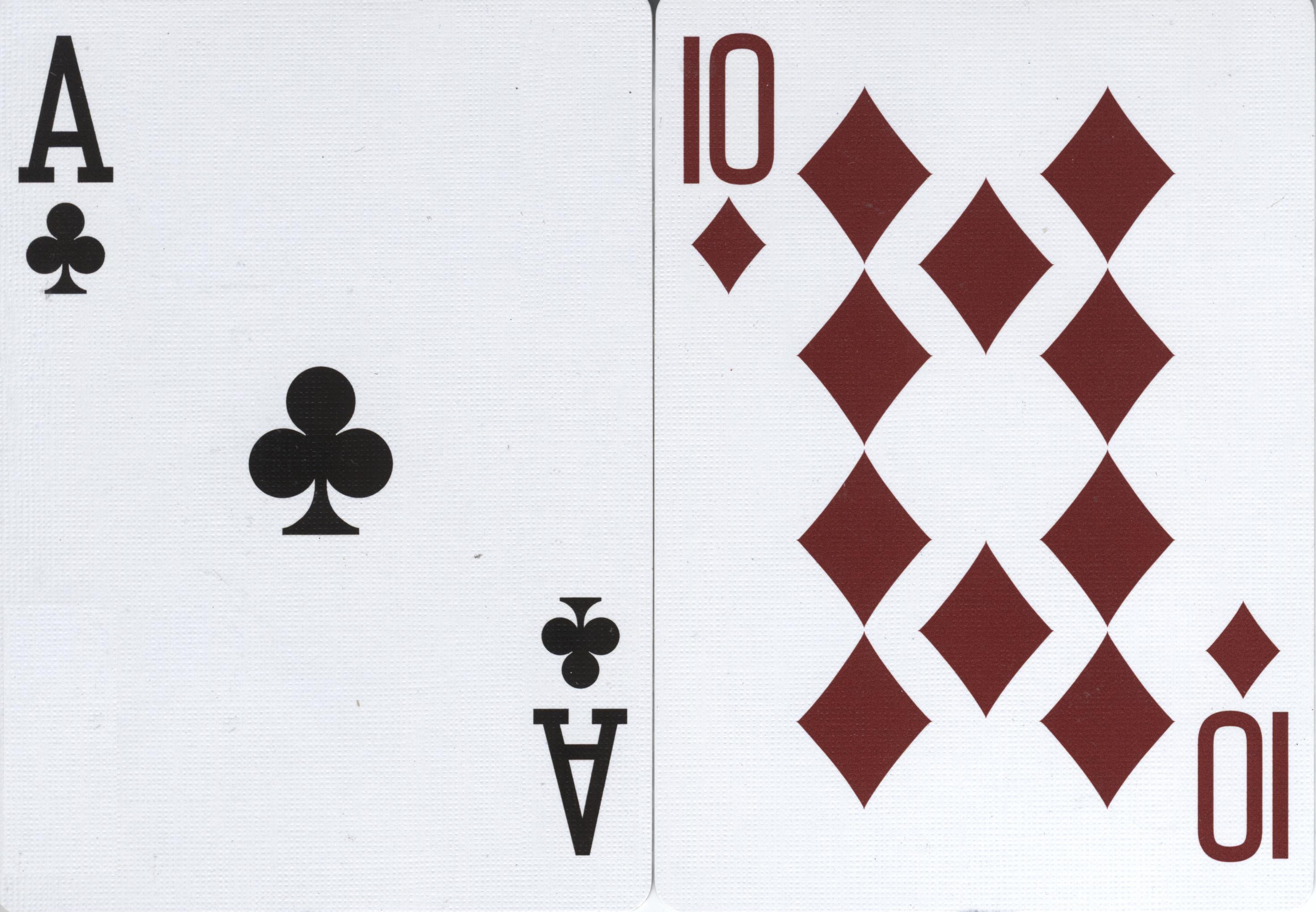
The Hi-Lo counting system — the most widely taught and used method — assigns a value of +1 to low cards (2 through 6), a value of -1 to high cards (10 through ace), and 0 to neutral cards (7, 8, 9). As cards are dealt, the player maintains a running count. When the count is high and positive, the remaining shoe contains proportionally more high cards, and the player raises their bet. When the count is negative, the player bets the minimum. This correlation between count and bet size — betting big when advantaged, betting small when disadvantaged — is how a card counter generates a long-run positive expected return estimated between 0.5% and 1.5% over the house in favorable conditions.
Card counting is legal. It is not cheating. It is applied mathematics. However, it is extremely unwelcome in casinos, which retain the legal right to ask any player to leave or to restrict their betting. Modern countermeasures include continuous shuffle machines, frequent mid-shoe shuffles, and surveillance systems trained to detect the betting spread patterns associated with counting. Effective card counting requires deep penetration into the shoe — at least 70% of cards dealt before reshuffling — a significant betting spread, and flawless execution of both basic strategy and deviation plays, all under the observation of casino staff. It is a demanding skill that requires hundreds of hours of practice to deploy reliably.
Side Bets Are Where Your Edge Evaporates
Modern blackjack tables — particularly in online casinos — are surrounded by side bet options. Perfect Pairs, 21+3, Lucky Ladies, Royal Match, Bust It, and dozens more all tempt players with the promise of large bonus payouts for rare card combinations. They are visually engaging, narratively exciting, and financially punishing.
The house edge on blackjack side bets almost universally ranges from 4% to 15% or higher. These are not comparable to the 0.3% to 0.5% edge of a well-played main game. They are an entirely different category of bet, closer to a proposition wager or a lottery ticket than a strategic casino game. The simple rule is this: every dollar wagered on a side bet is a dollar that is no longer working at the favorable odds of the main blackjack game. Side bets exist for one purpose — to recapture the mathematical advantage that skilled players have clawed back through basic strategy and table selection.
The one exception to this rule applies exclusively to advanced card counters who have learned to track specific card combinations that correlate to positive expected values on certain side bets in specific conditions. This is a narrow, specialized skill that does not apply to the vast majority of players. For everyone else, the guidance is straightforward: treat the side bet circle as if it does not exist.
The Full House Edge Reduction Cheat Sheet
To consolidate everything in this guide, here is a practical summary of the key variables, their impact on house edge, and the direction in which each one moves the math. Think of this as your table-selection checklist before you sit down to play.
On blackjack payout: 3:2 is the correct game. 6:5 adds approximately 1.4% to the edge — walk away from any table paying 6:5 when a 3:2 alternative exists. On the dealer soft 17 rule: always prefer S17 over H17, as the S17 rule reduces the house edge by approximately 0.2%. On doubling after splits: when permitted, this reduces the edge by 0.14%. On re-splitting aces: when permitted, this reduces the edge by 0.08%. On late surrender: correct use reduces the edge by approximately 0.08%, and on the rare early surrender, correct application is worth approximately 0.6% — seek it out aggressively if you ever encounter it. On deck count: fewer decks carry a lower intrinsic edge, but only when payout and other rules are equivalent — always evaluate the full rule set, never deck count alone. On insurance: zero benefit to a basic strategy player, carrying a house edge of approximately 7% on the sub-bet, so decline unconditionally every time.
When you combine the best available rules — single or double deck with 3:2 payouts, S17, doubling after splits allowed, late surrender, and re-splitting aces — with perfectly executed basic strategy, the resulting house edge can be as low as 0.28%. When you then add disciplined card counting at a deep-penetration shoe, the edge flips in the player's favor entirely. This is not magic. It is mathematics applied with discipline and patience.
Blackjack is not a game you beat with luck. It is a game you approach systematically, table by table, hand by hand, decision by decision. The gap between the player who sits down and guesses versus the player who has done the work is not measured in luck — it is measured in percentage points that compound silently over every single hand dealt. Learn the strategy. Find the right table. Never deviate. The edge is there to be taken.
FREE STATS & STAKING TRACKER
Log your bets, track CLV, and manage your bankroll like a pro with our institutional-grade tracking tool.
OPEN FREE TRACKER